
Hot work hazards are a major concern in industrial environments where activities like welding, cutting, and grinding are performed. These hot work hazards involve the generation of sparks, heat, and flames, which can easily ignite flammable materials and lead to serious incidents. Understanding hot work hazards and risks is essential for maintaining a safe workplace and ensuring compliance with safety standards.
What Are Hot Work Hazards and How Do They Affect the Workplace?
Hot Work Hazards refer to the risks created by activities that generate heat, sparks or flames. These hazards can easily ignite flammable materials, release toxic fumes, or cause serious burns.
Common Examples of Hot Work
- Welding
- Grinding
- Cutting
- Brazing and soldering
- Flame heating
- Torch cutting
In the workplace, hot work becomes dangerous when:
- Flammable substances are nearby
- Work is carried out in confined spaces
- Proper safety controls are not followed
- Workers lack Awareness or training
Even a small spark can lead to a major fire accident if safety measures are ignored. That’s why industries enforce strict hot work permit systems and safety protocols.
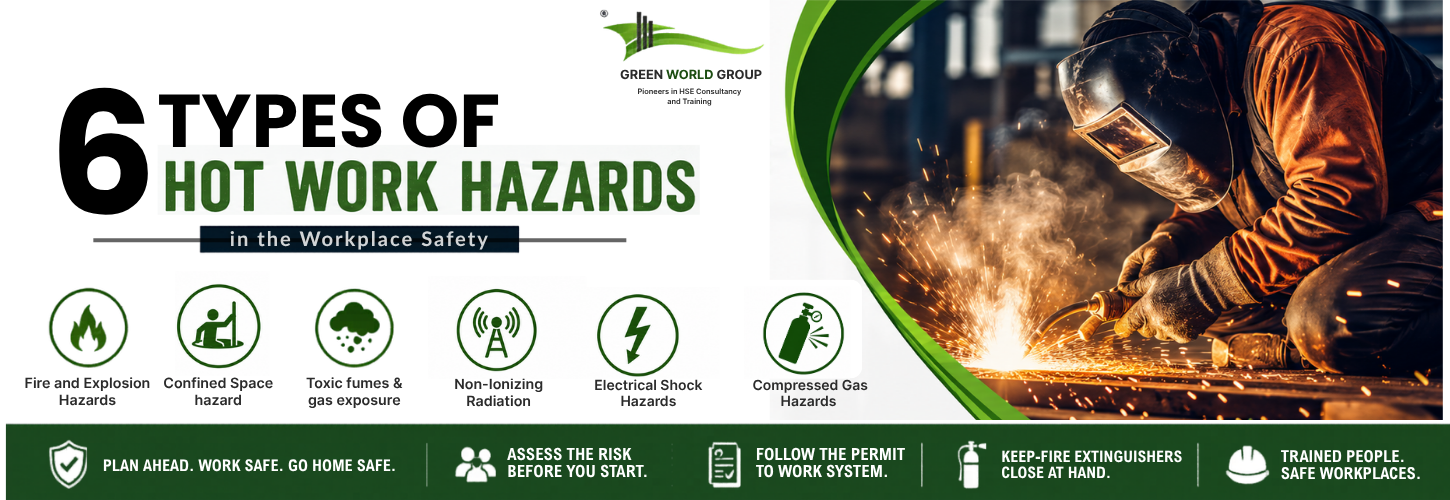
6 Type of Hot Work Hazard
Hot work activities, such as welding, cutting, and grinding, involve multiple hazards that can seriously impact worker safety. Understanding each type helps in effective risk control and prevention.
-
-
- Fire and Explosion Hazards
- Confined Space Hazard
- Toxic Fumes and Gases
- Non-Ionizing Radiation
- Electrical Shock Hazards
- Compressed Gas Hazards
1. Fire and Explosion Hazards
Fire and explosions are the most critical risks associated with hot work. Sparks, molten metal or heat generated during welding and cutting can easily ignite flammable materials like oils, chemicals, dust, or gases present in the work area.
For example, performing welding near fuel storage or chemical containers without proper isolation can lead to catastrophic incidents. Lack of fire-resistant barriers and poor housekeeping further increase the risk.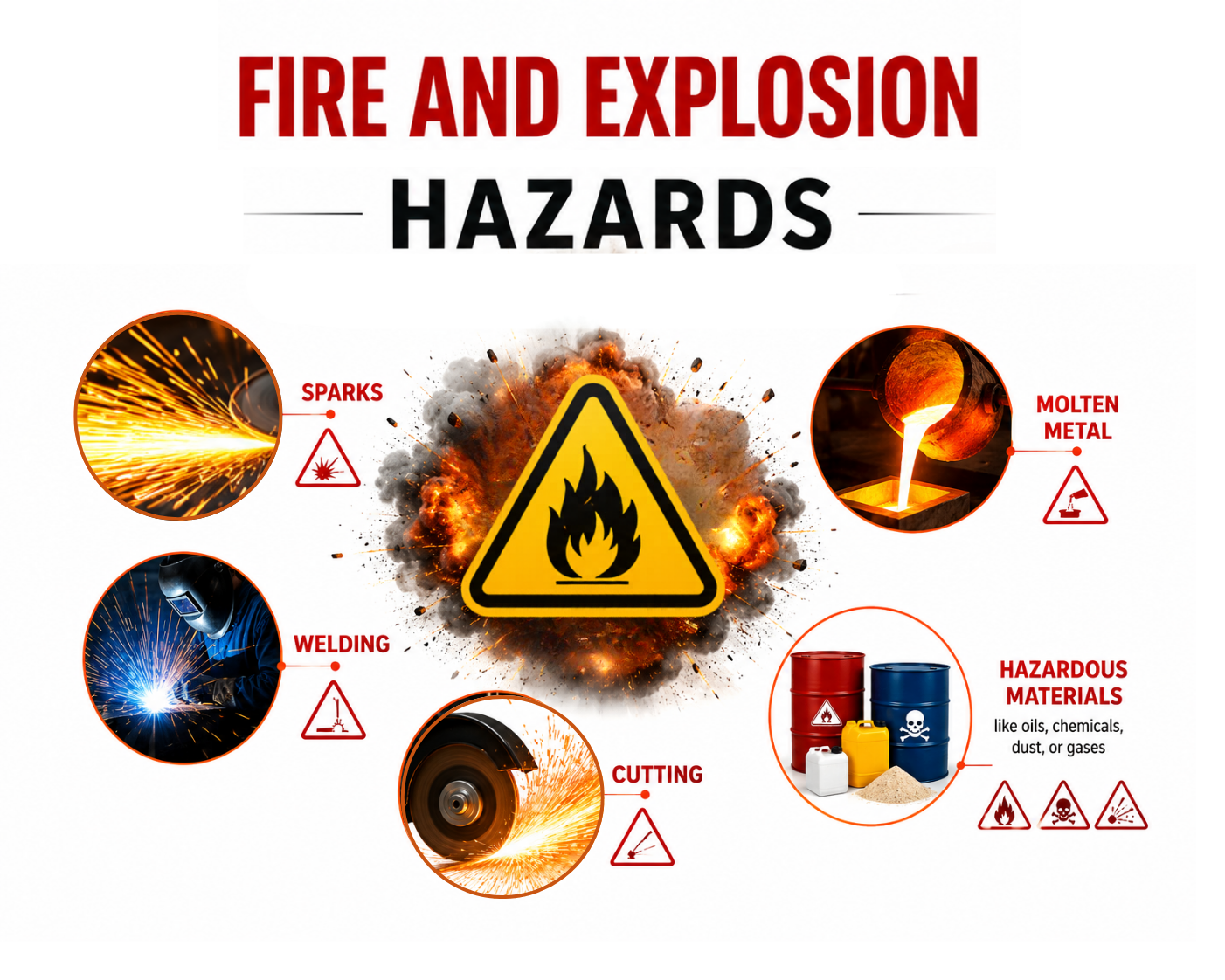
Possible Effects
- Workplace fires and explosions
- Burns and serious injuries
- Damage to equipment and buildings
- Smoke inhalation and toxic exposure
Common Control Measures
- Remove or isolate flammable materials from work areas
- Use fire-resistant barriers and spark containment methods
- Maintain proper ventilation to prevent vapor buildup
- Inspect electrical equipment regularly
- Keep fire extinguishers and emergency equipment accessible
- Implement a hot work permit system
- Train employees in fire prevention and emergency response procedures
Improve workplace safety with proper Fire and Explosion Risk Assessment practices
check here for detailed safety guidance
2. Confined Space Hazard
Hot work conducted in confined spaces such as tanks, silos, pipelines, or storage vessels is extremely dangerous. These spaces often have limited ventilation, which allows heat, fumes and gases to accumulate quickly.
Oxygen levels may drop, or toxic gases may build up, leading to suffocation or poisoning. Additionally, confined spaces increase the chances of explosions due to trapped flammable vapors. Rescue operations are also more difficult in such environments.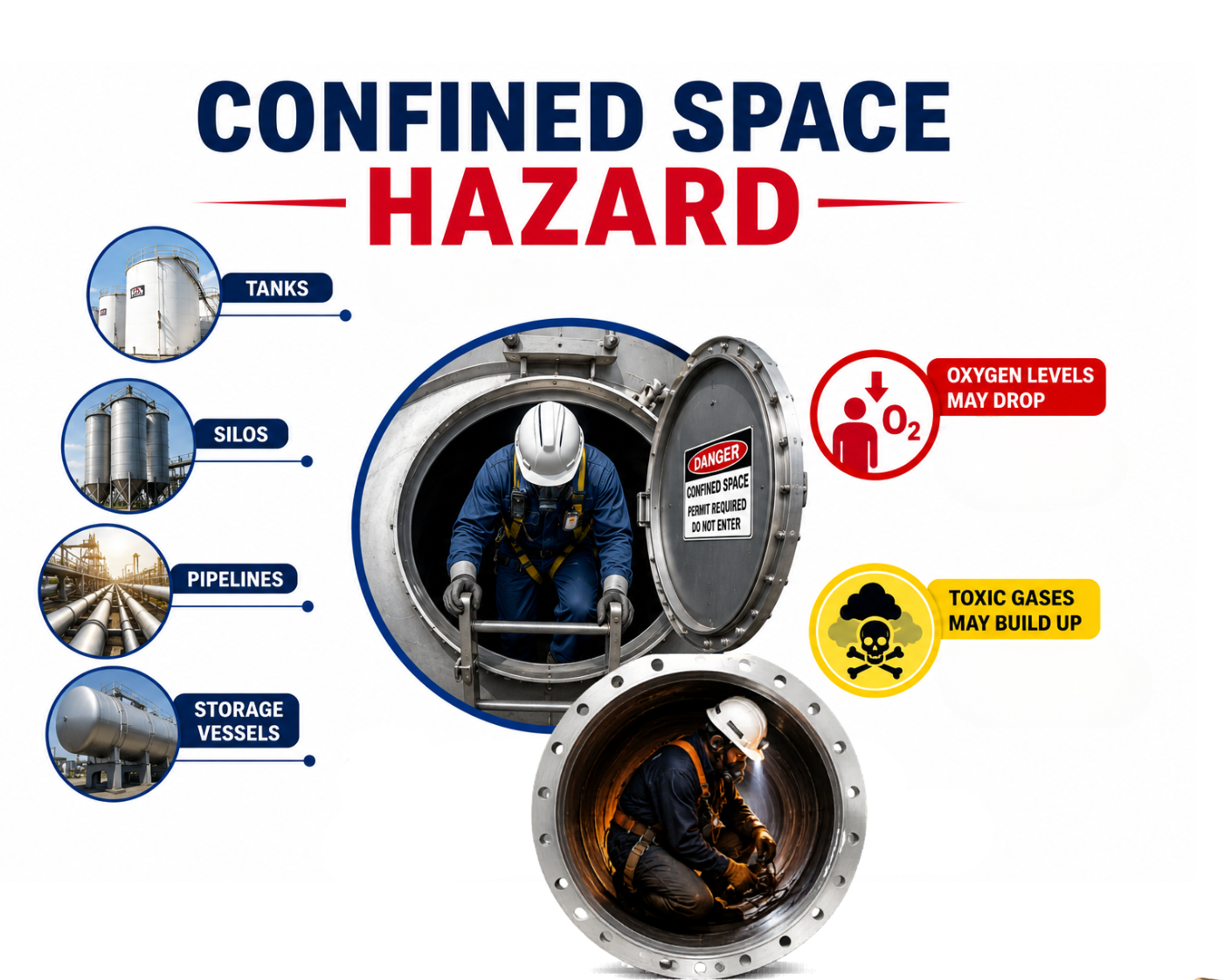
Possible Effects
- Breathing difficulties or suffocation
- Poisoning by toxic gases
- Fire or explosion injuries
- Loss of consciousness
- Serious injuries or fatalities
Common Control Measures
-
- Conduct atmospheric testing before entry
- Ensure proper ventilation in the confined space
- Use a confined space entry permit system
- Provide continuous gas monitoring
- Wear appropriate personal protective equipment (PPE)
- Keep emergency rescue equipment and plans ready
- Train workers on confined space safety procedures
Learn how to prevent hazards and stay healthy in confined spaces
Check here for expert confined space safety tips
3. Toxic Fumes and Gases
Hot work processes produce harmful fumes and gases, especially when working on metals coated with paint, zinc, lead or other chemicals. Welding fumes may contain toxic substances that can damage the lungs and nervous system.
Common gases released include carbon monoxide, nitrogen oxides, and ozone. long-term exposure can lead to serious health conditions, while short-term exposure may cause dizziness, irritation, or breathing difficulty.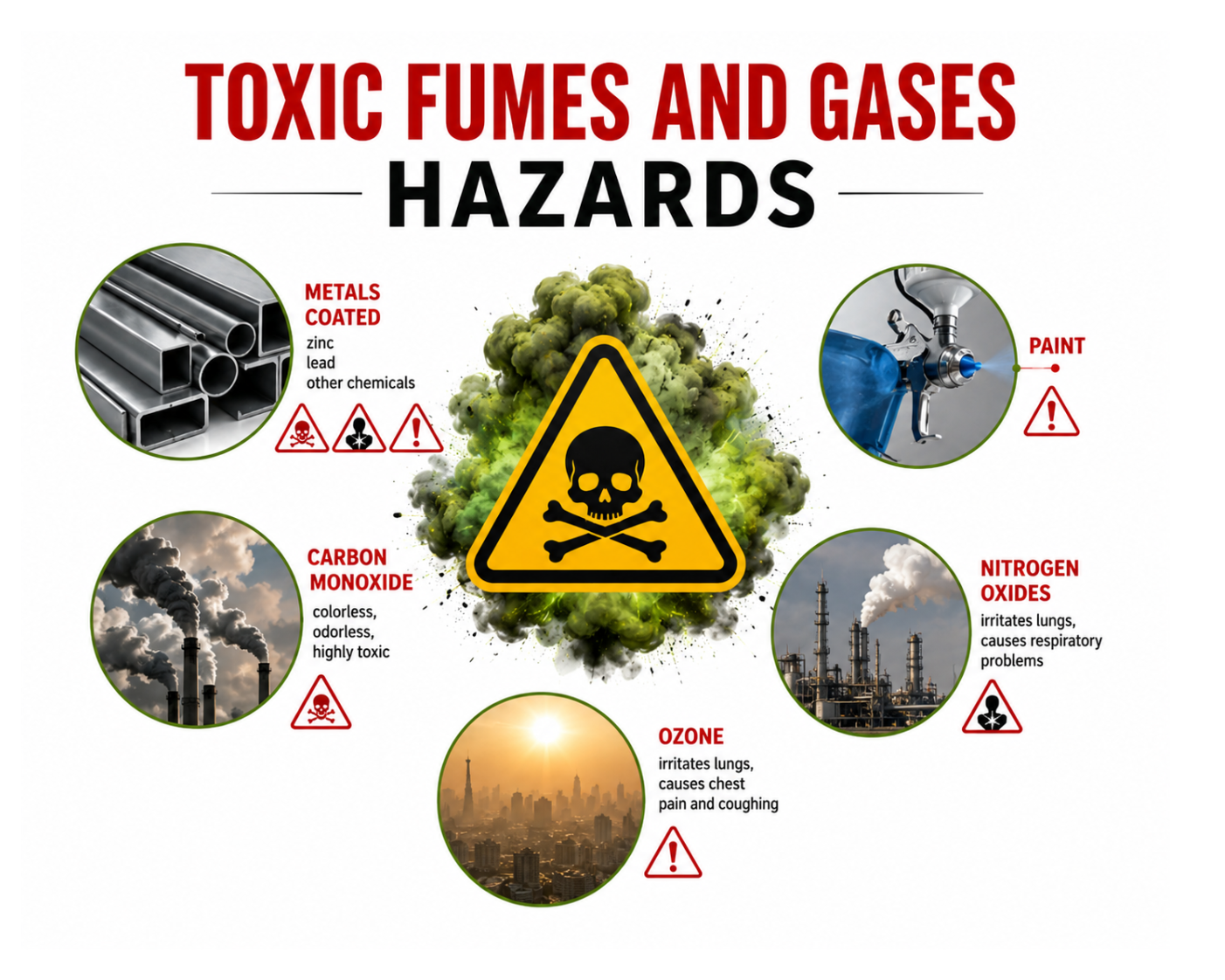
Possible Effects
- Breathing difficulties and lung irritation
- Dizziness, headaches, and nausea
- Eye, nose, and throat irritation
- Long-term respiratory diseases
- Loss of consciousness in severe cases
Common Control Measures
- Ensure proper ventilation and local exhaust systems
- Use respiratory protective equipment (RPE)
- Monitor air quality regularly
- Inspect gas cylinders and equipment for leaks
- Train workers on hazardous gas safety procedures
Reduce workplace exposure to noise, dust, and harmful particles
check here to explore PPE safety measures for ear and nose protection
4. Non-Ionizing Radiation
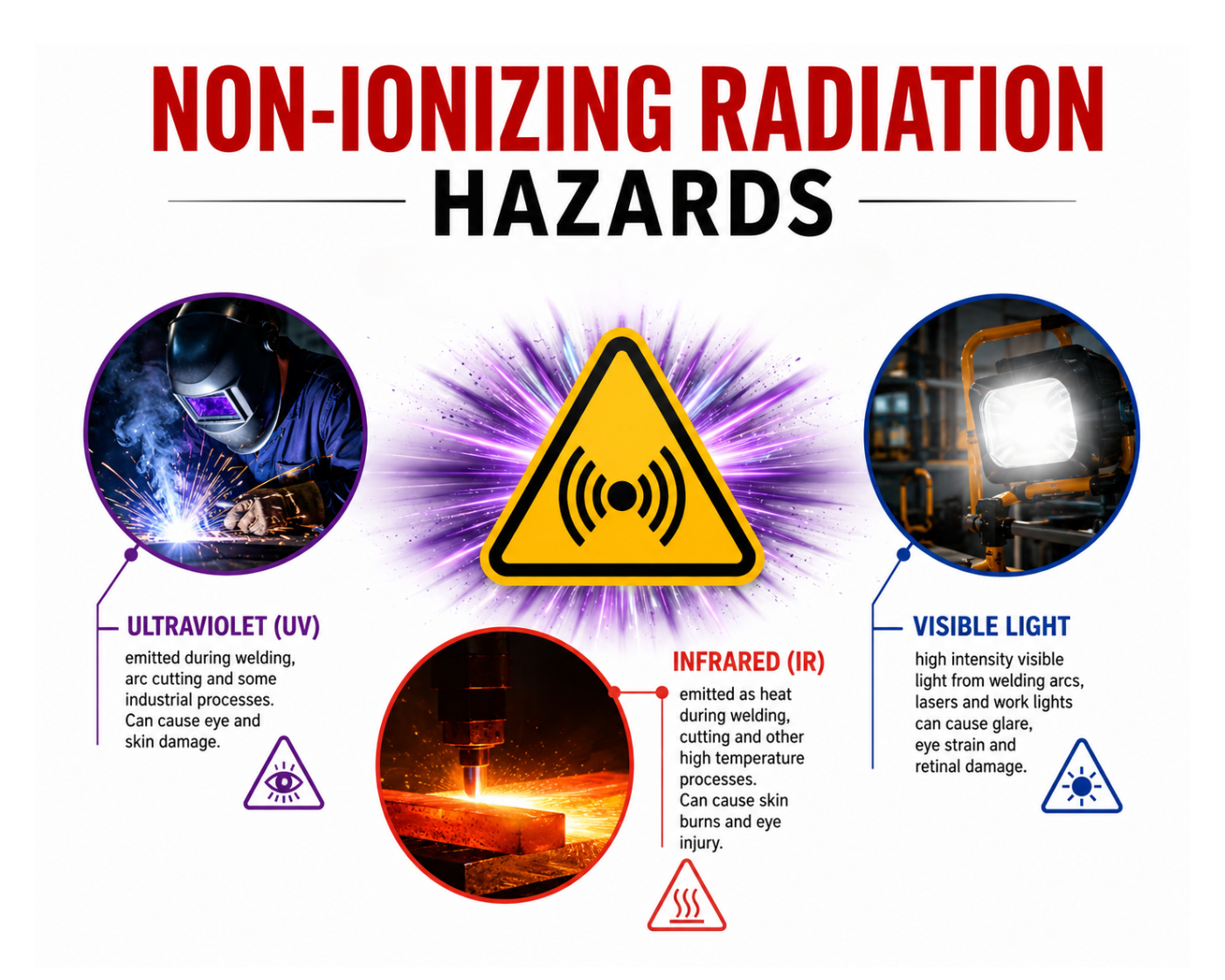
Non-ionizing radiation is a workplace hazard commonly encountered during welding,cutting, laser operations and electrical equipment use. Hot work, especially welding, produces non-ionizing radiation, including ultraviolet (UV), infrared (IR), and visible light. Exposure to this radiation can cause injuries like “arc eye” (welder’s flash), skin burns, and long-term damage.
Possible Effects
- Eye damage or “arc eye”
- Skin burns and irritation
- Heat stress and discomfort
- Headaches and fatigue
- Long-term exposure risks to the skin and eyes
Common Control Measures
- Use proper eye and face protection
- Wear flame-resistant clothing and gloves
- Install shielding or barriers around radiation sources
- Limit exposure time near radiation-producing equipment
- Ensure proper training and awareness for workers
- Maintain equipment regularly to prevent excessive exposure
Protect employees from radiation hazards with proper safety knowledge
check here to explore Radiation Safety Training courses
5. Electrical Shock Hazards
Many hot-work operations involve electrically powered equipment, such as welding machines. Faulty wiring, damaged cables, or improper grounding can lead to electrical shock or electrocution.
Working in wet or damp conditions significantly increases the risk, as water is a good conductor of electricity. Contact with live parts or poor maintenance practices are common causes of accidents.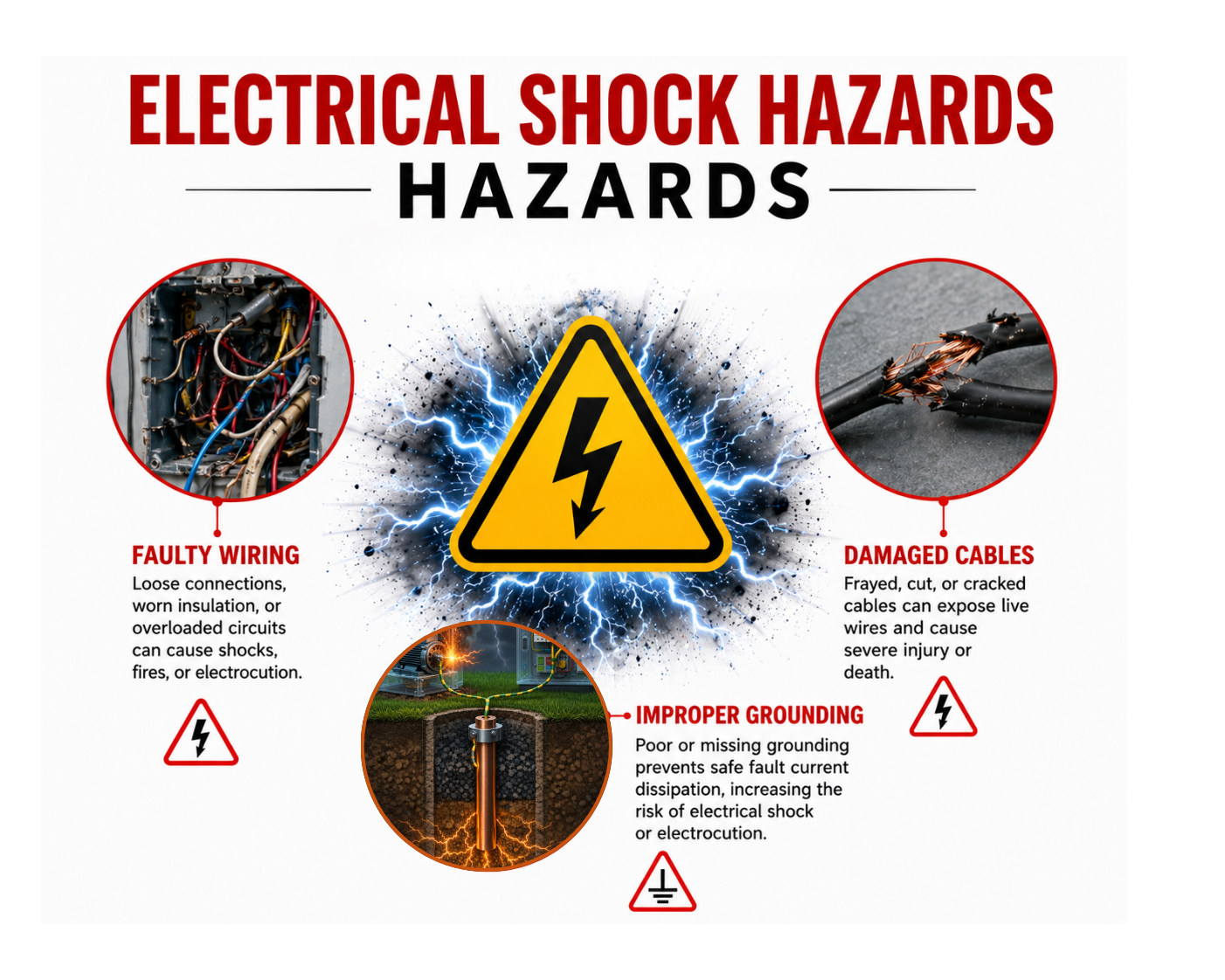
Possible Effects
- Electric shocks and severe burns
- Muscle spasms and nerve damage
- Cardiac arrest or breathing difficulties
- Falls caused by sudden shock
- Fire or explosion incidents
Common Control Measures
- Inspect electrical tools and cables regularly
- Use properly grounded equipment
- Keep electrical systems away from water and moisture
- Wear insulated gloves and protective equipment
- Avoid overloading electrical circuits
- Implement lockout/tagout (LOTO) procedures during maintenance
- Train workers on electrical safety practices
Ensure safe electrical practices in the workplace and reduce risks
check here for expert electrical safety tips
6. Compressed Gas Hazards
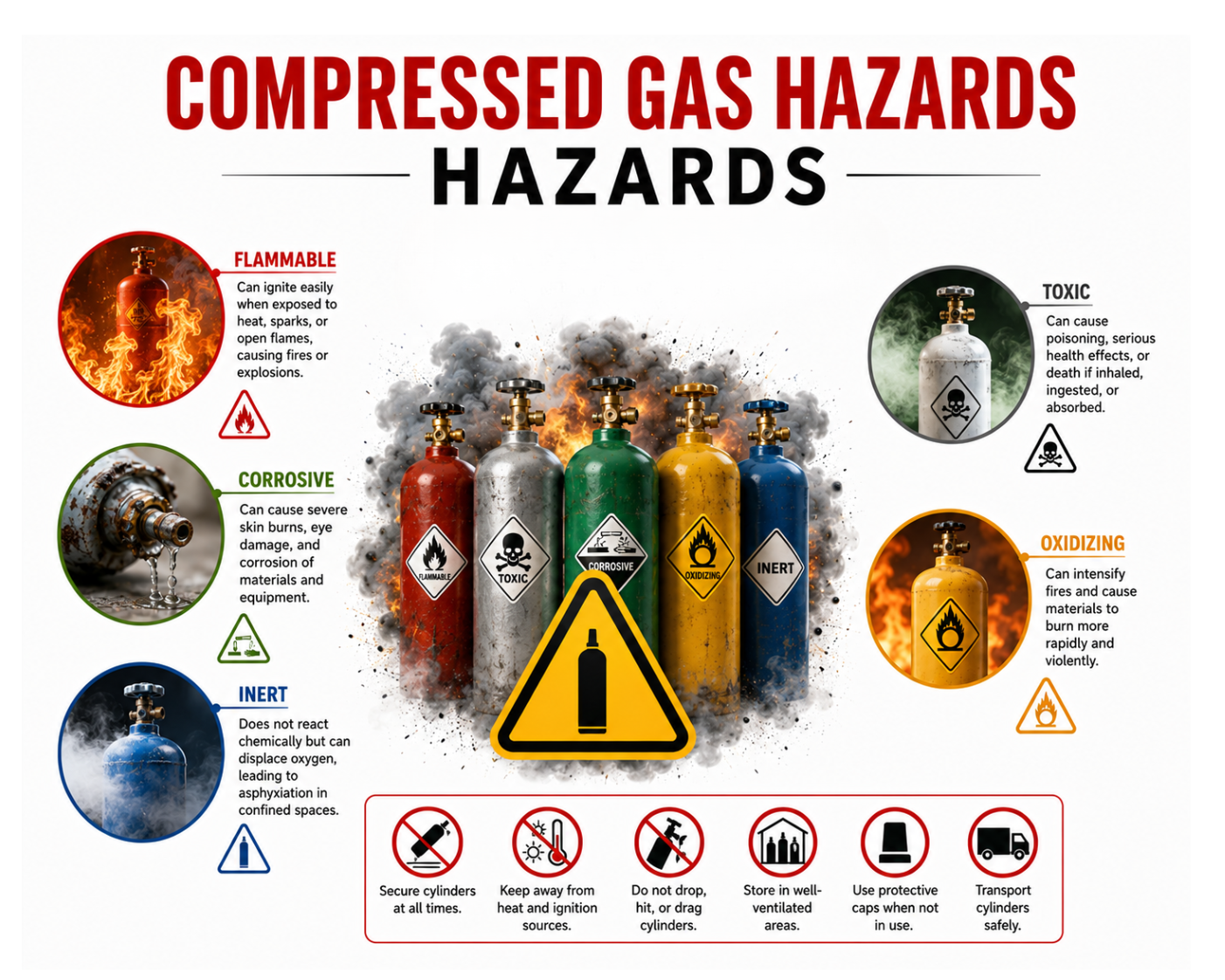
Compressed gas hazards are a major concern in industrial workplaces, laboratories, hospitals, and manufacturing facilities. Compressed gases are stored under high pressure in cylinders and are used for welding, medical applications, refrigeration and chemical processes. These gases may be flammable, toxic, corrosive, oxidizing, or inert. Improper handling, storage, or transportation of gas cylinders can lead to serious accidents, including fires, explosions, toxic exposure, and physical injuries.
Types of Compressed Gas Hazards
- Fire and Explosion Hazards: Flammable gases can ignite and cause explosions.
- Toxic Gas Exposure: Harmful gases may cause breathing problems or poisoning.
- Oxygen Deficiency: Inert gases can reduce oxygen levels and cause suffocation.
- High-Pressure Hazards: Damaged cylinders may explode or become dangerous projectiles.
- Chemical and Corrosive Hazards: Certain gases can burn skin, damage eyes, or react dangerously with other substances.
Possible Effects
- Fire and explosion incidents
- Toxic gas exposure and breathing problems
- Oxygen deficiency and suffocation
- Cylinder blasts or projectile injuries
- Burns, eye injuries, and property damage
Common Control Measures
- Store gas cylinders upright and secure them properly
- Keep cylinders away from heat, sparks, and flammable materials
- Ensure proper ventilation in work areas
- Inspect cylinders, valves, and regulators regularly for leaks or damage
- Use appropriate personal protective equipment (PPE)
- Label cylinders clearly and handle them carefully
- Train workers on safe compressed gas handling procedures
- Use the correct regulator and equipment for each gas type
Equip Your Employees with Green World Group Training
Creating a safe work environment requires the right knowledge and professional training.
Green World Group provides industry-focused safety training programs designed to equip
individuals and organizations with practical skills in workplace safety, including hot work hazard management.Invest in safety. Empower your workforce.
Choose Green World Group to strengthen your safety culture and build a secure future.
Green World Group, a pioneer in safety certification, has delivered 2,200+ batches worldwide with 20 years of experience
-