
What is confined space entry?
Confined space entry refers to the process of entering a confined space to perform inspection, maintenance, cleaning, repair, or operational tasks. A confined space is an enclosed or partially enclosed area that:
Common Examples of Hot Work
- Has limited entry and exit Points
- It is not designed for continuous Worker occupancy
- May contain hazardous atmospheres or dangerous conditions
Common examples of confined spaces:
- Storage tanks and vessels
- Silos and hoppers
- Boilers and furnaces
- Sewers and Manholes
- Pipelines and ducts
- Underground Pits and Vaults
Before entering these areas, organizations must follow a proper confined space entry procedure, conduct atmospheric testing, and ensure workers are equipped with appropriate confined space safety equipment.
Want to become confident in confined space operations?
Check here for training details
What are the dangers of confined space entry?
Confined spaces can expose workers to serious hazards that are rarely found in normal work environments. These dangers can develop suddenly and become life-threatening within minutes if proper safety measures are not followed.
Common Hazards in Confined Spaces
- Oxygen deficiency or oxygen-rich atmospheres
- Toxic, flammable, or explosive gases
- Inadequate ventilation
- Engulfment by liquids, chemicals, or loose materials
- Excessive heat and heat stress
- Poor lighting and limited visibility
- Difficult rescue operations during emergencies
What Are the 4 Gases in a Confined Space?
Atmospheric testing is one of the most important safety steps during confined space entry. Workers commonly monitor these 4 gases in a confined space:
1. Oxygen (O₂): Oxygen levels must remain safe for breathing. Low oxygen can lead to unconsciousness or death.
2. Hydrogen Sulfide (H₂S): A toxic gas commonly found in sewage systems, oil refineries and industrial environments.
3. Carbon Monoxide (CO): A highly dangerous gas produced by engines, combustion equipment, and poor ventilation.
4. Explosive or Flammable Gases (LEL): Flammable vapors can create fire and explosion hazards inside confined spaces.
An oxygen meter for confined spaces and a multi-gas detector are essential tools for monitoring atmospheric conditions before and during entry.
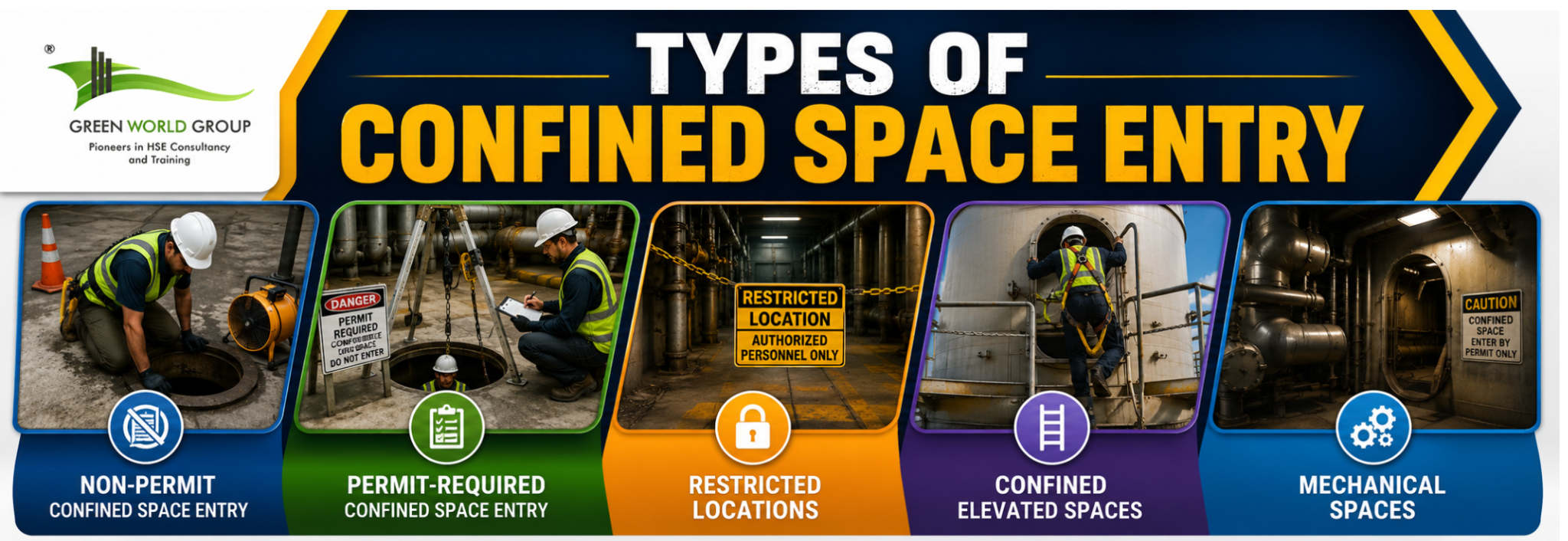
Types Of Confined Spaces
There are various forms of confined spaces, each with its own set of hazards and risks. Understanding these confined spaces helps employers and workers implement proper safety procedures and emergency response measures.
-
- Non-Permit Confined Space Entry
- Permit-Required Confined Space Entry
- Restricted Locations
- Confined Elevated Spaces
- Mechanical Spaces
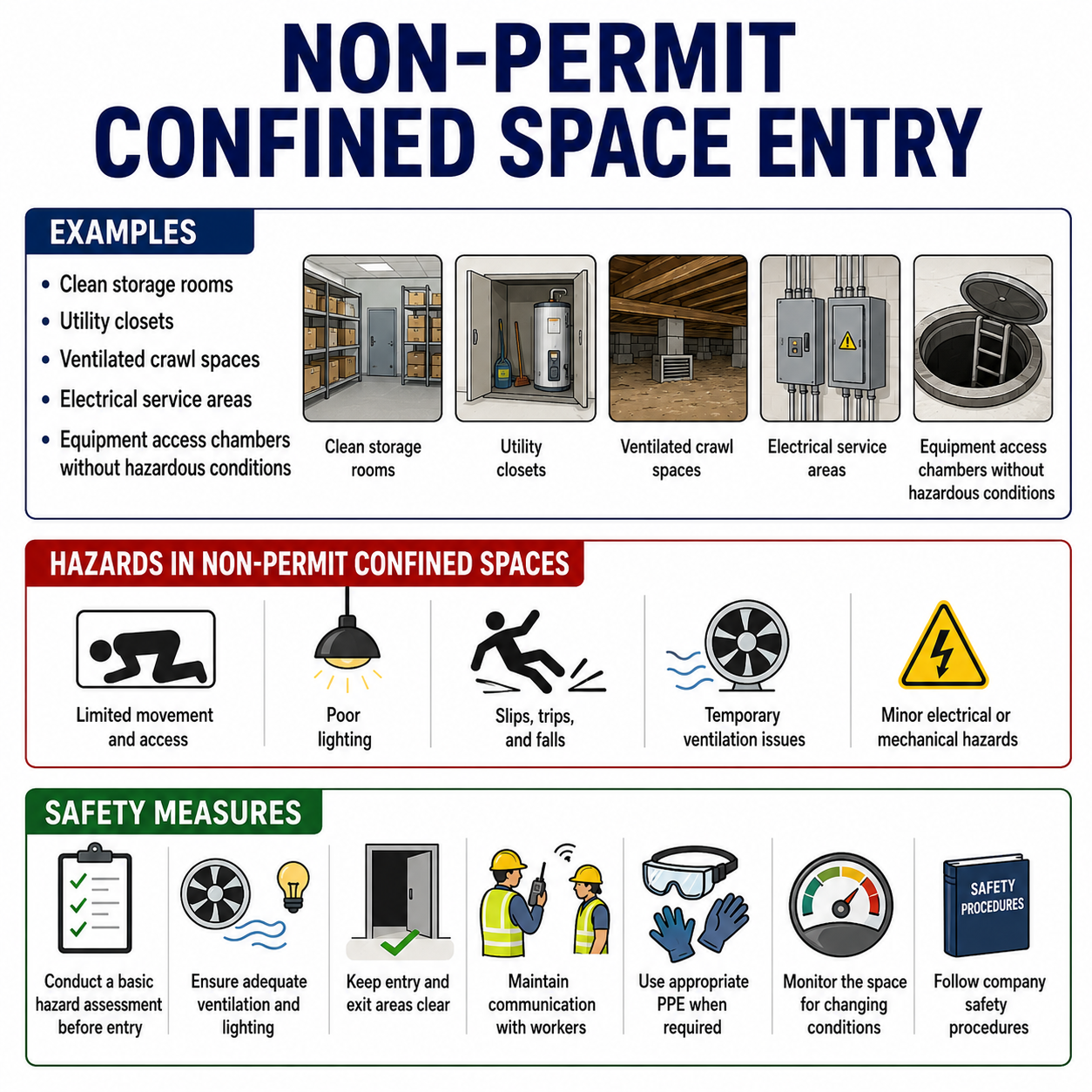
1. Non-Permit Confined Space Entry
These confined spaces meet the definition of a confined space but do not contain rerecognized major hazards under normal working Conditions. Although these areas may appear safer, workers must still follow confined space safety procedures.
Examples
- Clean storage rooms
- Utility closets
- Ventilated crawl spaces
- Electrical service areas
- Equipment access chambers without hazardous conditions
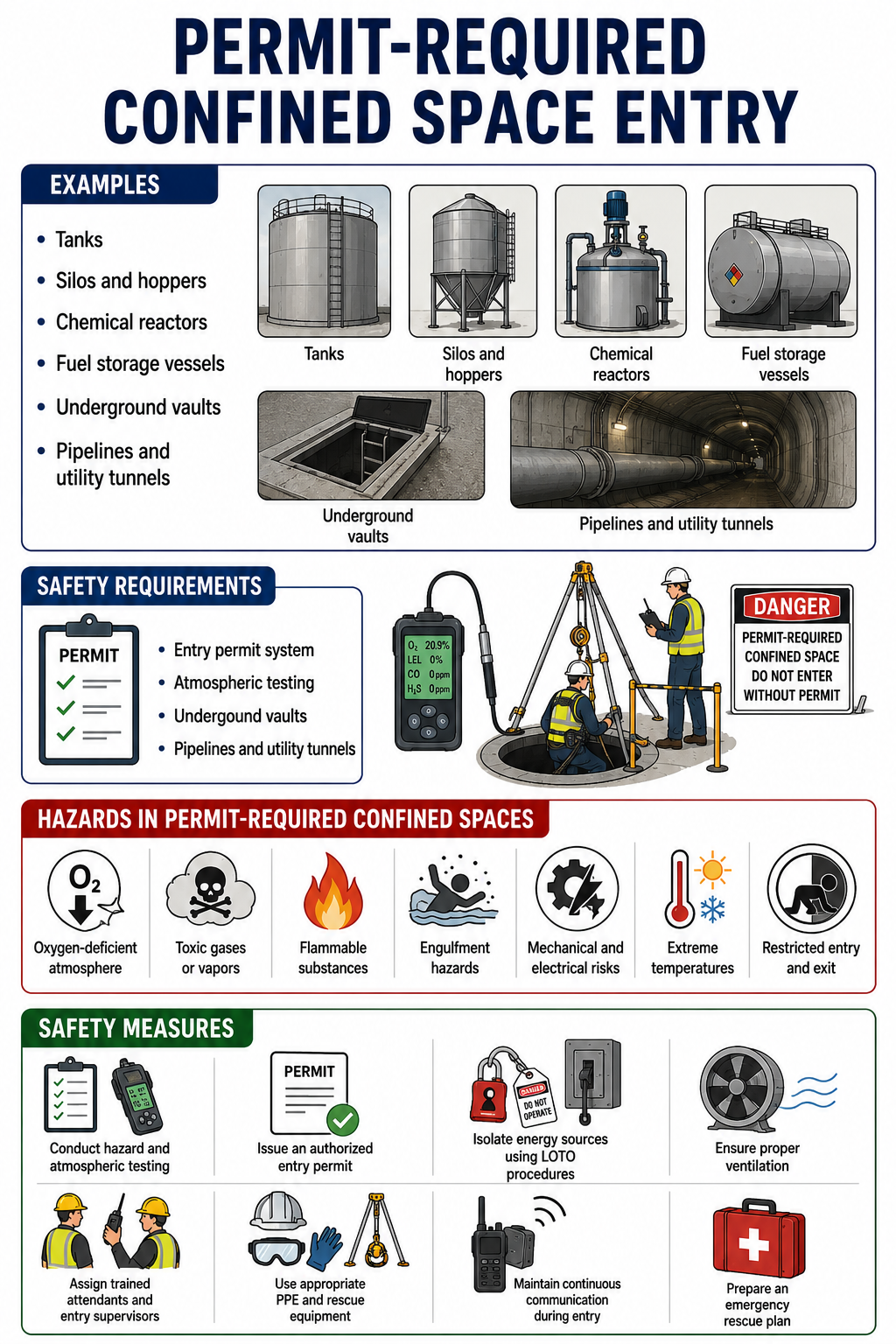
2. Permit-Required Confined Space Entry
These confined spaces meet the definition of a confined space but do not contain rerecognized major hazards under normal working Conditions. Although these areas may appear safer, workers must still follow confined space safety procedures.
Examples
- Tanks
- Silos and hoppers
- Chemical reactors
- Fuel storage vessels
- Pipelines and utility tunnels
- Underground vaults
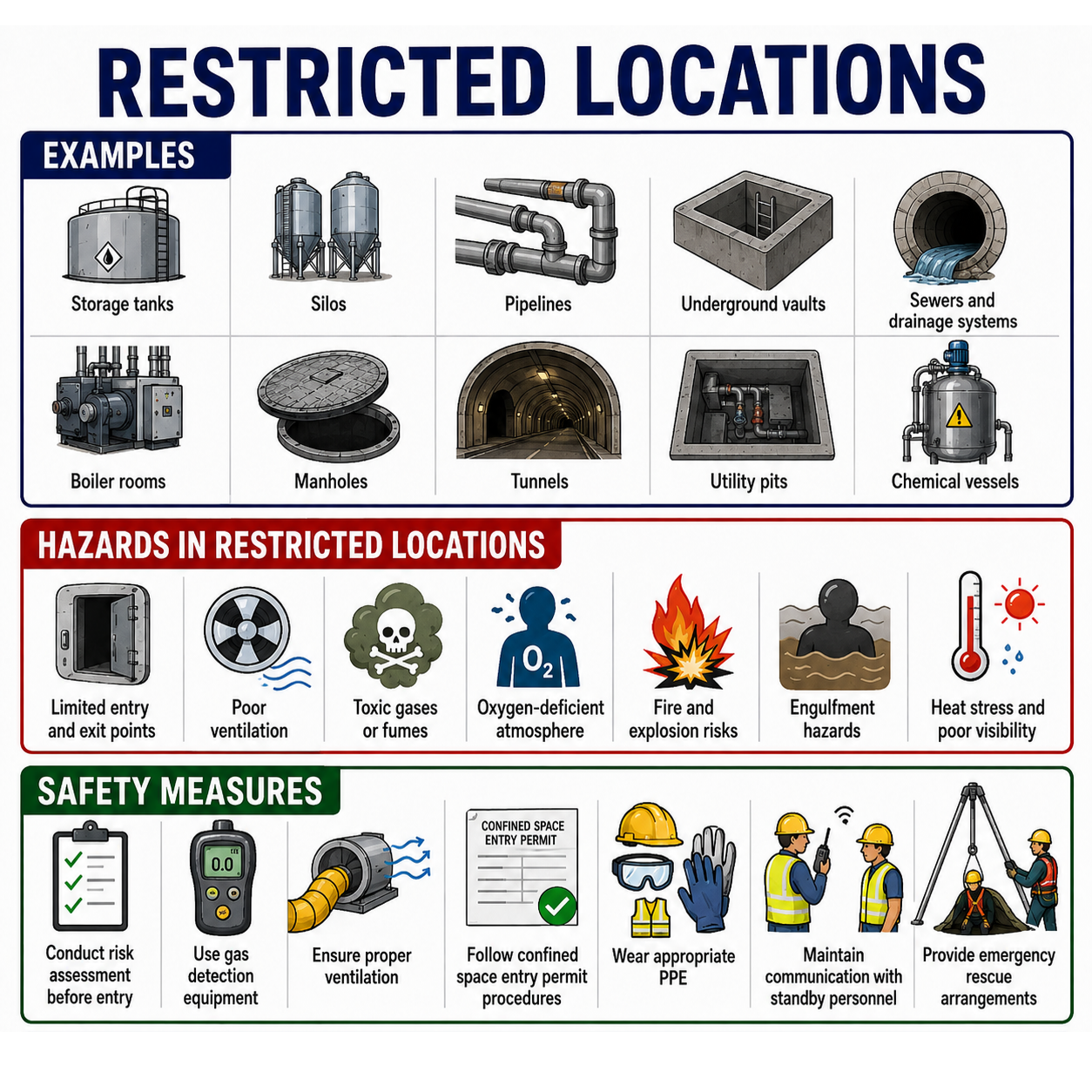
3. Restricted Locations
Restricted locations are areas within a confined space that are difficult to enter, exit, or move around safely. These locations may increase the risk of injury, oxygen deficiency, toxic exposure, or entrapment during work activities.
Examples
- Storage tanks
- Silos
- Pipelines
- Underground vaults
- Sewers and drainage systems
- Boiler rooms
- Manholes
- Tunnels
- Utility pits
- Chemical vessels
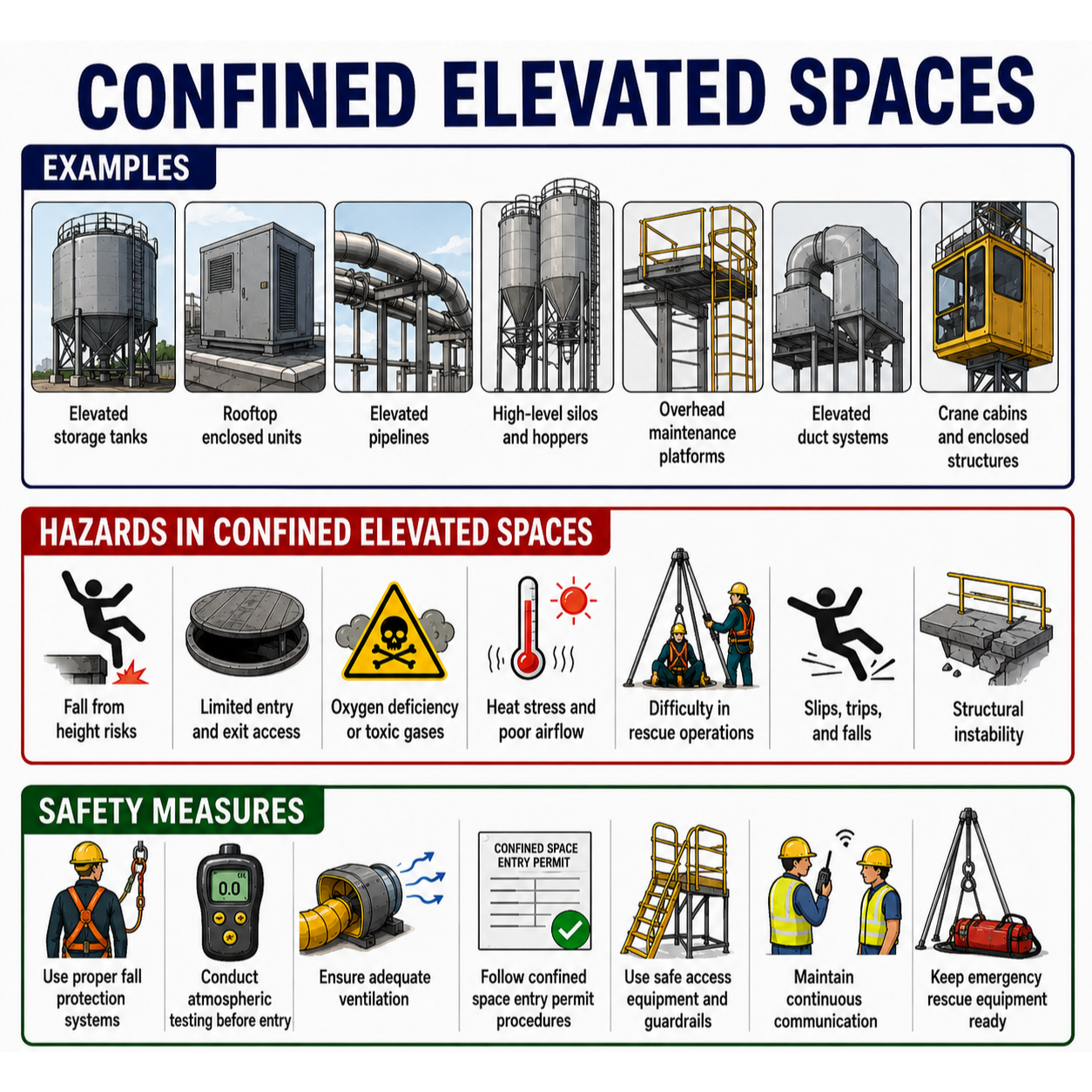
4. Confined Elevated Spaces
Confined elevated spaces are restricted work areas located at heights where workers may face both confined space hazards and fall hazards. These spaces are difficult to access and may have limited ventilation, restricted movement, and challenging emergency rescue conditions.
Examples
- Elevated storage tanks
- Rooftop enclosed units
- Elevated pipelines
- High-level silos and hoppers
- Overhead maintenance platforms
- Elevated duct systems
- Crane cabins and enclosed structures
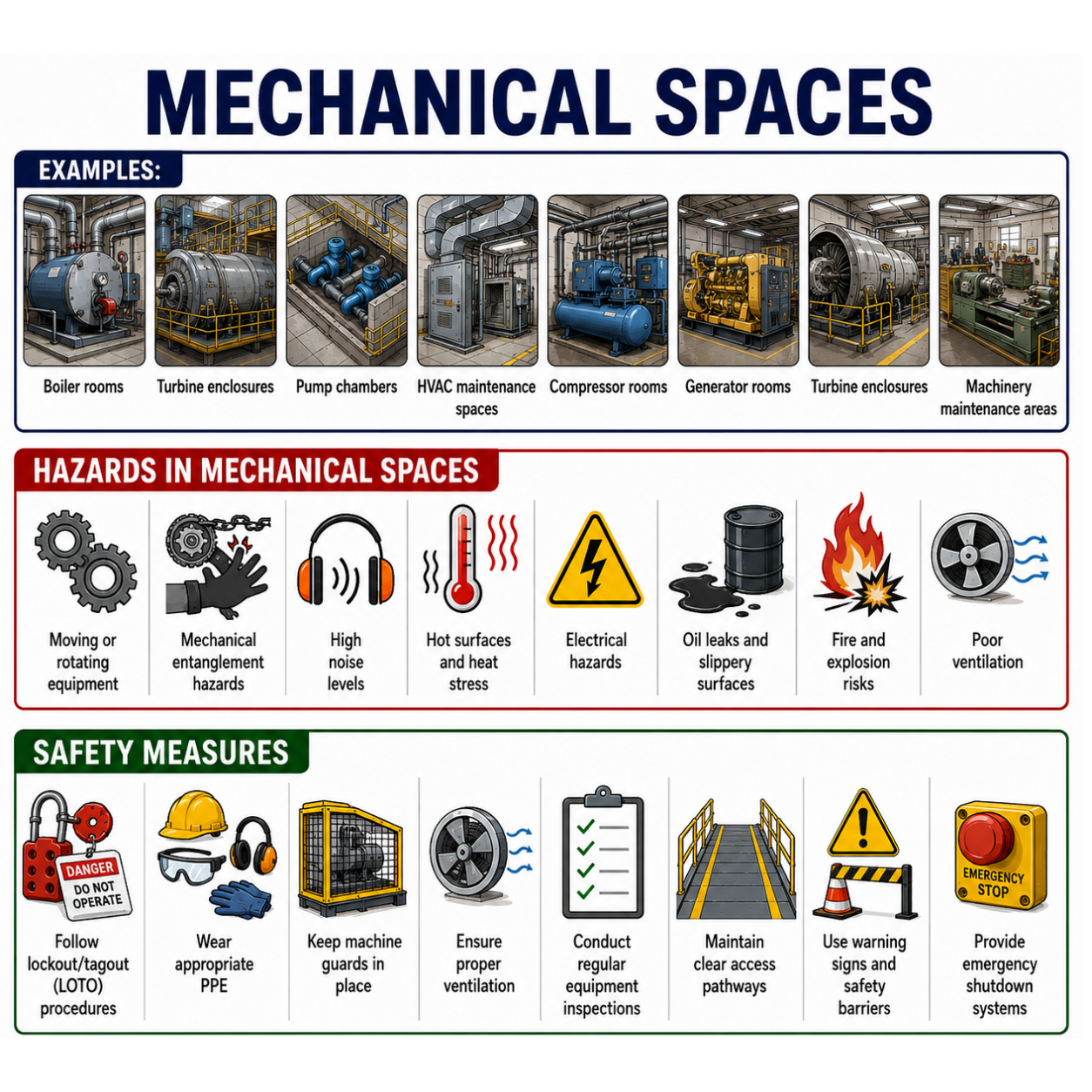
5. Mechanical Spaces
Mechanical spaces contain equipment such as boilers, turbines, pumps, HVAC systems, and machinery requiring inspection, maintenance, or repair.
Examples
- Boiler rooms
- Turbine enclosures
- Pump chambers
- HVAC maintenance spaces
- Compressor rooms
- Generator rooms
- Machinery maintenance areas
Importance of Confined Space Rescue Training
Confined space rescue training helps emergency teams and workers respond safely during workplace incidents.
Training Topics:
- Hazard identification
- Importance of Confined Space Training
- Confined space training helps workers understand
- Confined space hazards
- Safe confined space entry procedures
- Gas testing requirements
- PPE usage
- Rescue operations
- Emergency response protocols
Organizations that provide regular confined space training create safer working environments and reduce workplace accidents.
Equip Your Employees with Green World Group Training
Employers must identify confined space hazards and implement proper safety measures to protect workers during confined space entry. Employees working in confined spaces should receive proper confined space training, use appropriate PPE, and follow safe work procedures to reduce workplace risks.
At Green World Group, we provide industry-focused confined space training programs tailored to meet your organizational and industrial safety requirements. Our practical and expert-led training programs help workers improve hazard awareness, emergency response skills, and workplace safety performance.
Our confined space training programs include the following:
Green World Group helps organizations create safer workplaces and strengthen confined space safety standards.
Green World Group, a pioneer in safety certification, has delivered 2,200+ batches worldwide with 20 years of experience
FAQ
What defines a confined space?
A confined space is an area with limited entry and exit that is not designed for continuous occupancy.
What are the types of confined spaces?
Types Of Confined Spaces
- Non-Permit Confined Space Entry
- Permit-Required Confined Space Entry
- Restricted Locations
- Confined Elevated Spaces
- Mechanical Spaces
What are the four main dangers of a confined space?
The main dangers are oxygen deficiency, toxic gases, fire/explosion, and engulfment hazards.
What is the cause of death in confined spaces?
The primary cause of death is oxygen deficiency and exposure to toxic gases.
What are the unsafe conditions in a confined space?
Unsafe conditions include poor ventilation, toxic atmospheres, electrical hazards, and inadequate rescue measures.