
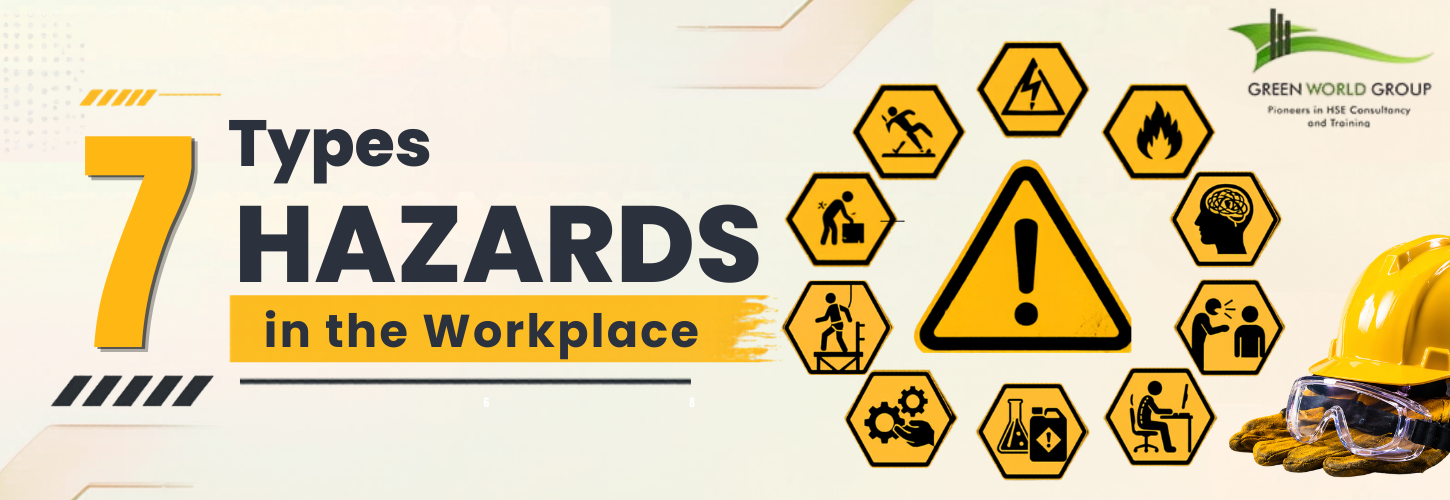
Workplace safety is an important part of every organization. When Hazard is ignored, small issues can quickly turn into serious accidents. Identifying potential hazards and managing them effectively is a key part of successful Occupational Health and Safety (OHS) practices.
Understanding the different types of workplace hazards helps employers and employees create a safer, more productive environment. Below are the 7 types of workplace hazards explained in a clear and engaging way.
What Is a Workplace Hazard?
A workplace hazard is anything in the work environment that has the potential to cause injury, illness, or harm to employees. Hazards may result in immediate accidents or long-term health problems if they are not properly managed.
These hazards can arise from:
- Work processes
- Equipment and machinery
- Chemical Hazards
- Human behavior
- Environmental conditions
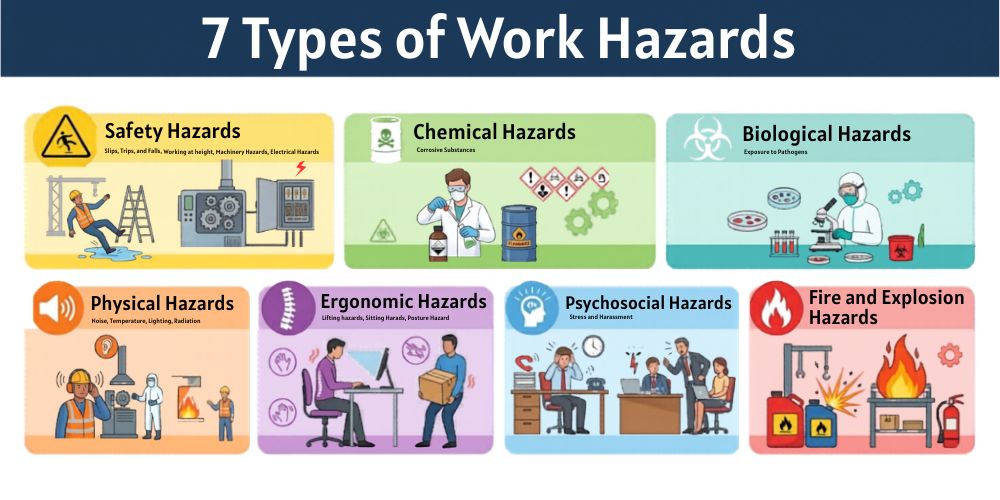
7 Types of Work Hazards
Understanding the types of work hazards helps improve risk identification and control.
- Safety Hazards
- Chemical Hazards
- Biological Hazards
- Physical Hazards
- Ergonomic Hazards
- Psychosocial Hazards
- Fire and Explosion Hazards
1.Safety Hazards
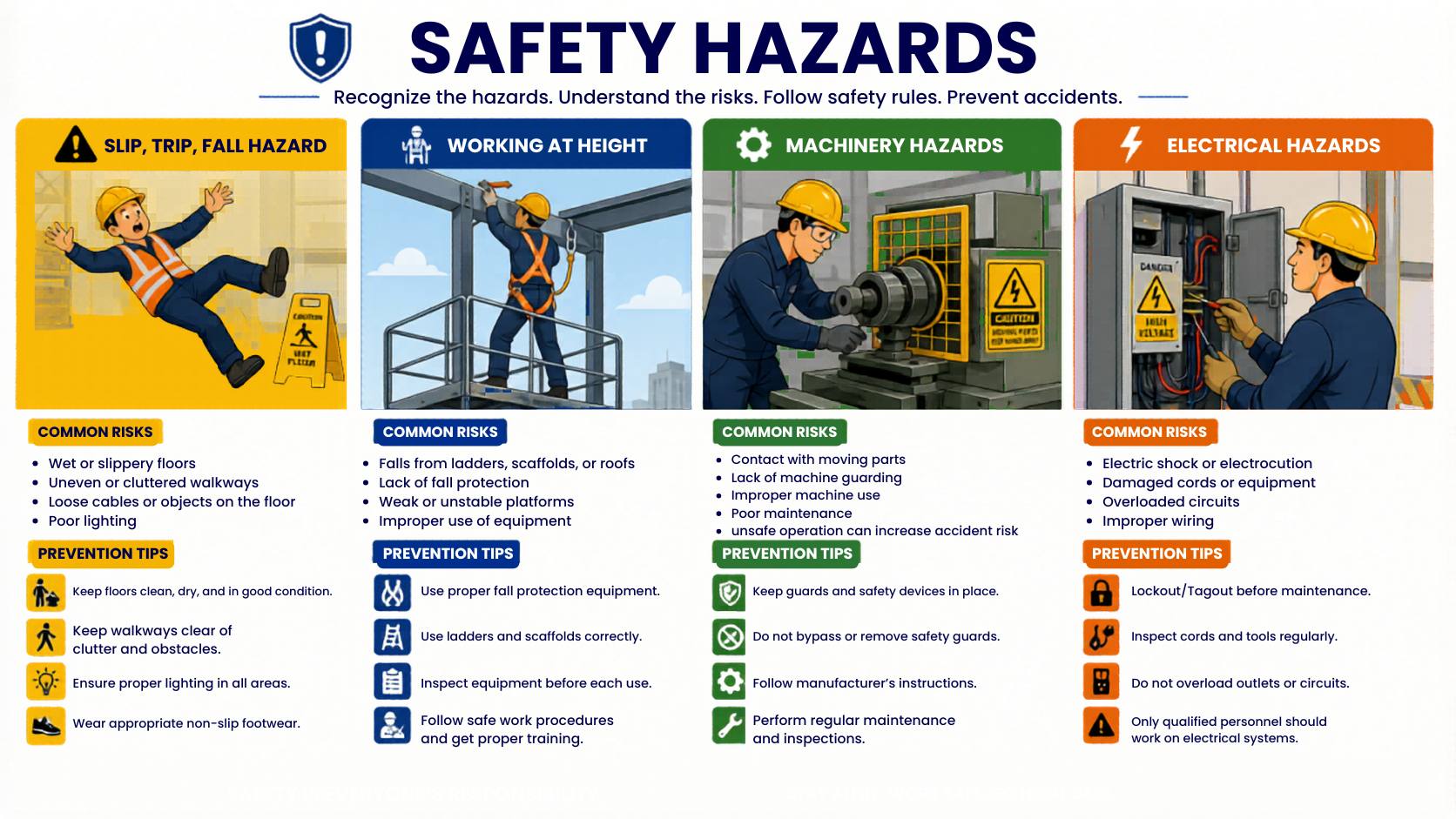
Safety Hazards are one of the most common types of workplace hazards that can lead to injuries, Accidents or even long-term health issues. These Hazards are a key part of occupational health and hazards, and they exist in almost every industry—from construction sites to offices. Identifying Safety hazards early is essential to prevent risks and ensure a safe working environment.
Common Types of Safety Hazards
a)slip, trip, fall hazard
Slips, trips and falls are among the most common workplace risks, often caused by wet floors, uneven surfaces or cluttered walkways. These incidents can lead to serious injuries like fractures, sprains, and head trauma if not properly managed.
Common Risks
- Contact with moving parts
- Lack of machine guarding
- Improper machine use
- Poor maintenance
- unsafe operation can increase accident risk
Prevention Tips
- Keep guards and safety devices in place
- Do not bypass or remove safety guards
- Follow manufacturer’s instructions
- Perform regular maintenance and inspections
b)Working at height
Working at height hazards are a major cause of serious workplace injuries and fatalities. Risks include falls, ladders, scaffolding, roofs and unprotected edges.
Common Risks
- Falls from ladders, scaffolds, or roofs
- Lack of fall protection
- Weak or unstable platforms
- Improper use of equipment
Prevention Tips
- Use proper fall protection equipment
- Use ladders and scaffolds correctly
- Inspect equipment before each use
- Follow safe work procedures and get proper training
-
c)Machinery Hazards
Machinery hazards refer to any potential source of injury or harm that arises from the use, movement, or operation of machines and mechanical equipment in the workplace. These hazards can result from moving parts, mechanical actions, or unsafe machine conditions that may cause physical injury to workers.
Types of Machinery Hazards
-
- Rotating parts (shafts, gears, belts)
- Crushing or entanglement points
- Cutting or shearing edges
- Flying particles or debris
- Unexpected machine start-up
Common Risks
- Contact with moving parts
- Lack of machine guarding
- Improper machine use
- Poor maintenance
- unsafe operation can increase accident risk
Prevention Tips
- Keep guards and safety devices in place
- Do not bypass or remove safety guards
- Follow manufacturer’s instructions
- Perform regular maintenance and inspections
d)Electrical Hazards
Electrical risks are among the most dangerous workplace hazards. Issues such as damaged cords, machine hazards, improper wiring, or contact with live wires can cause severe injuries.
Common Risks
- Electric shock or electrocution
- Damaged cords or equipment
- Overloaded circuits
- Improper wiring
Prevention Tips
- Lockout/Tagout before maintenance
- Inspect cords and tools regularly
- Do not overload outlets or circuits
- Only qualified personnel should work on electrical systems
2. Chemical Hazards
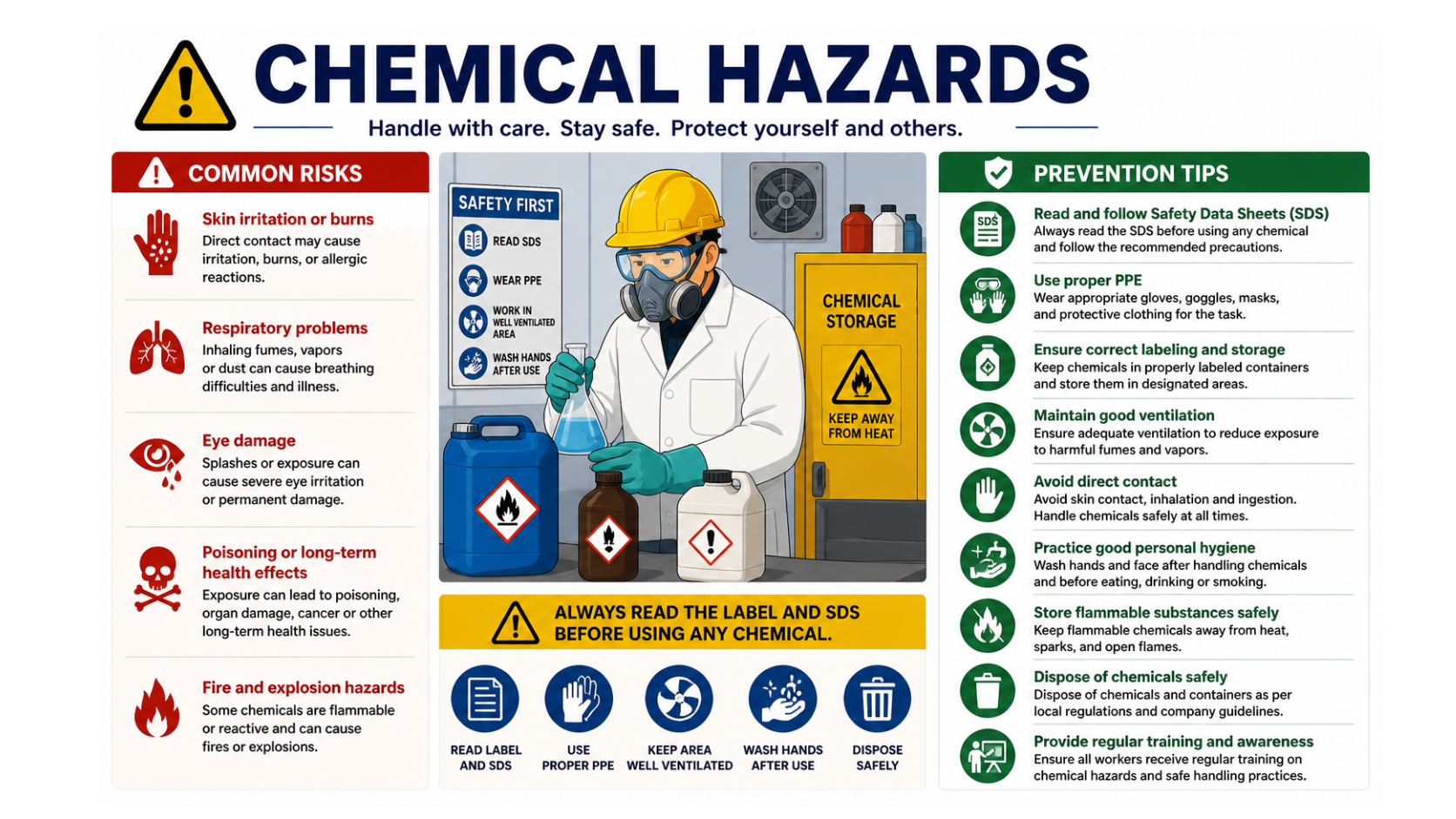
Chemical hazards occur when workers are exposed to harmful substances in solid, liquid, or gas form. These chemical hazards in industrial safety are common in industries handling paints, gases, solvents, and pesticides. Every chemical hazard at the workplace can create serious health risks depending on exposure.
Common Chemical Hazards
- Liquids like acids, paints and cleaning chemicals
- Vapors, fumes, and dust from welding or construction
- Gases such as propane and carbon monoxide
- Flammable chemicals like gasoline and solvents
- Pesticides cause chemical risks in the workplace
Common Risks
- Skin irritation or burns
- Respiratory problems
- Eye damage
- Poisoning or long-term health effects
- Fire and explosion hazards
Prevention Tips
- Read and follow Safety Data Sheets (SDS)
- Use proper PPE (gloves, goggles, masks, protective clothing)
- Ensure correct labeling and storage of chemicals
- Maintain good ventilation in work areas
- Avoid direct contact and handle chemicals safely
- Practice good personal hygiene (wash hands after use)
- Store flammable substances away from heat sources
- Dispose of chemicals safely as per guidelines
- Provide regular training and awareness for workers
Understand workplace chemical risks -
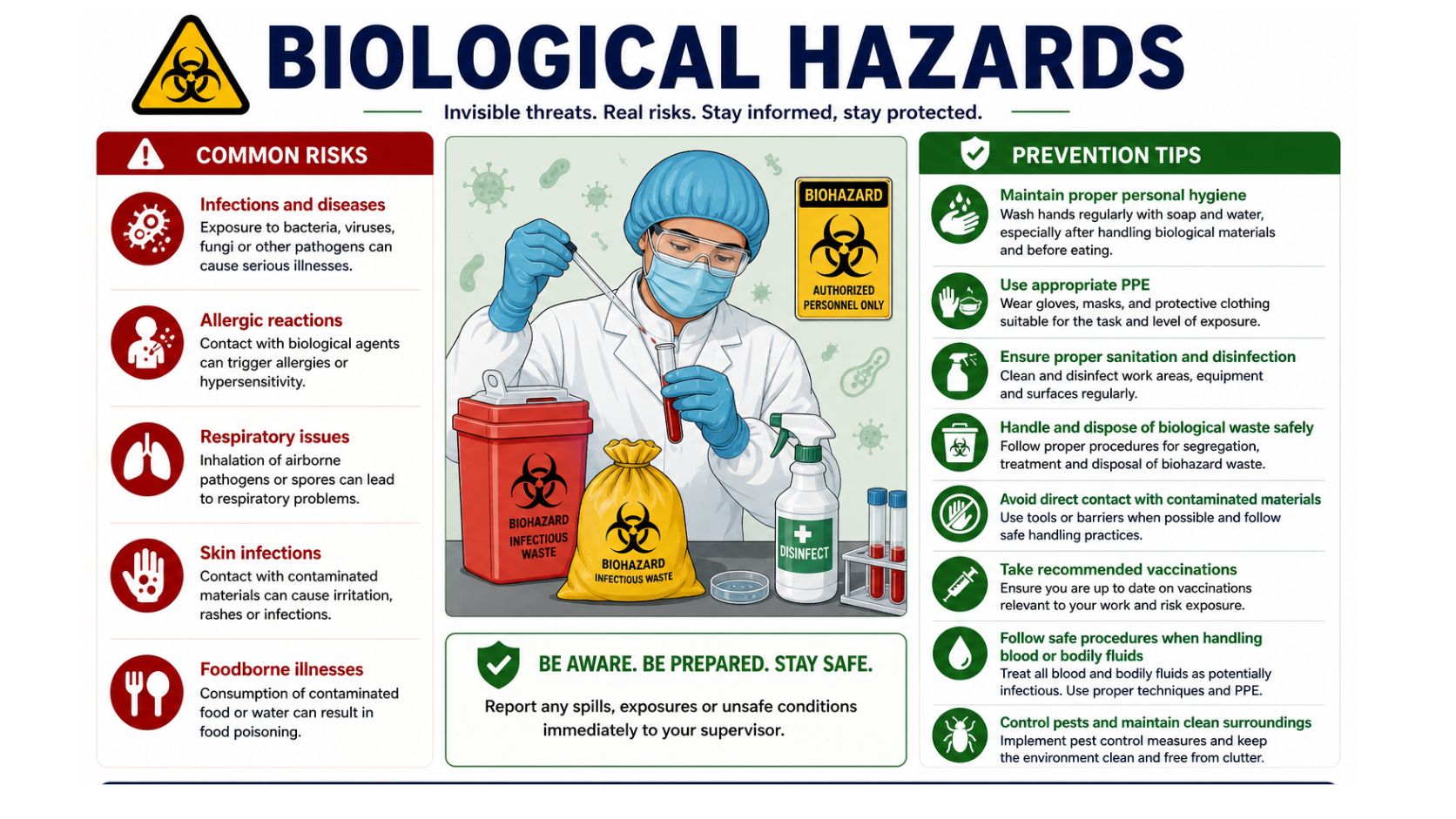
3. Biological Hazards
Biological hazards are risks caused by exposure to living organisms such as bacteria, viruses, fungi, plants and animals. These hazards are common in workplaces like healthcare, laboratories, agriculture , and waste management.
Employees may come into contact with infectious materials, contaminated surfaces or airborne pathogens.Common Biological Hazards
- Bacteria & Viruses: Cause infections and diseases through air, water, or contact
- Blood and Bodily Fluids: Risk of contamination in Healthcare and caregiving roles
- Fungi and Mold: Can lead to respiratory problems and allergies
- Insect Bites and Animal Contact: may transmit diseases or cause allergic reactions
- Animal and Bird Droppings: Can cause infections and breathing difficulties
Common Risks
- Infections and diseases
- Allergic reactions
- Respiratory issues
- Skin infections
- Foodborne illnesses
Prevention Tips
- Maintain proper personal hygiene (regular handwashing)
- Use appropriate PPE like gloves, masks, and protective clothing
- Handle and dispose of biological waste safely
- Avoid direct contact with contaminated materials
- Take recommended vaccinations where necessary
- Follow safe procedures when handling blood or bodily fluids
- Control pests and maintain clean surroundings
4. Physical Hazards
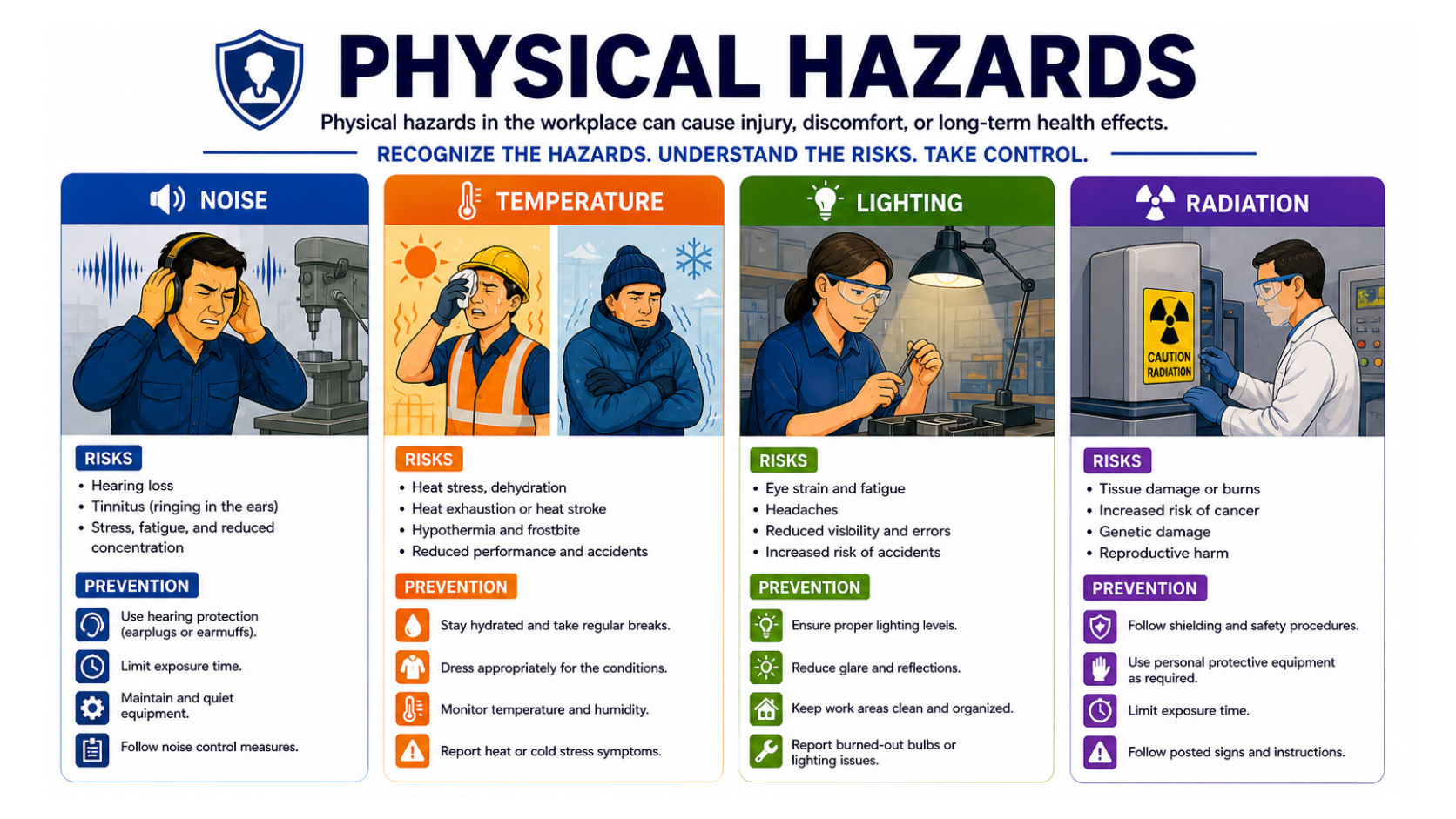
Physical or environmental hazards are workplace risks that can harm the body without direct contact. These hazards are commonly found in industries like construction, manufacturing, and outdoor work environments. Exposure to unsafe physical conditions can lead to injuries, illness or long-term health effects. Proper safety measures are essential to reduce these risks.
Common Physical Hazards
a)Noise
Continuous exposure to high noise levels from machinery, construction equipment, or manufacturing processes can lead to hearing loss and stress-related issues.
Common Risks
- Hearing loss
- Tinnitus (ringing in the ears)
- Stress, fatigue, and reduced concentration
Prevention Tips
- Use hearing protection (earplugs or earmuffs)
- Limit exposure time
- Maintain and quiet equipment
- Follow noise control measures
Learn how earmuffs prevent hearing loss -
b)Temperature
Extreme hot or cold conditions can cause heat exhaustion, dehydration, frostbite, or hypothermia, especially for outdoor workers like landscapers, roofers, and delivery personnel.
Common Risks
- Heat stress, dehydration
- Heat exhaustion or heat stroke
- Hypothesize and frostbite
- Reduced performance and accidents
Prevention Tips
- Stay hydrated and take regular breaks
- Dress appropriately for the conditions
- Monitor temperature and humidity
- Report heat or cold stress symptoms
c)Lighting
Poor lighting or excessive glare can create unsafe working conditions. Low light may lead to eye strain, mistakes and accidents, while overly bright lighting or direct sunlight can cause discomfort and reduced visibility.
Common Risks
- Eye strain and fatigue
- Headaches
- Reduced visibility and errors
- Increased risk of accidents
Prevention Tips
- Ensure proper lighting levels
- Reduce glare and reflections
- Keep work areas clean and organized
- Report burned-out bulbs or lighting issues
d)Radiation
Exposure to radiation in industries like healthcare, nuclear plants or research facilities can be harmful. It may lead to skin damage, radiation sickness, or long-term health risks such as cancer if proper protective measures are not followed.
Common Risks
- Tissue damage or burns
- Increased risk of cancer
- Genetic damage
- Reproductive harm
Prevention Tips
- Follow shielding and safety procedures
- Use personal protective equipment as required
- Limit exposure time
- Follow posted signs and instructions
5. Ergonomic Hazards
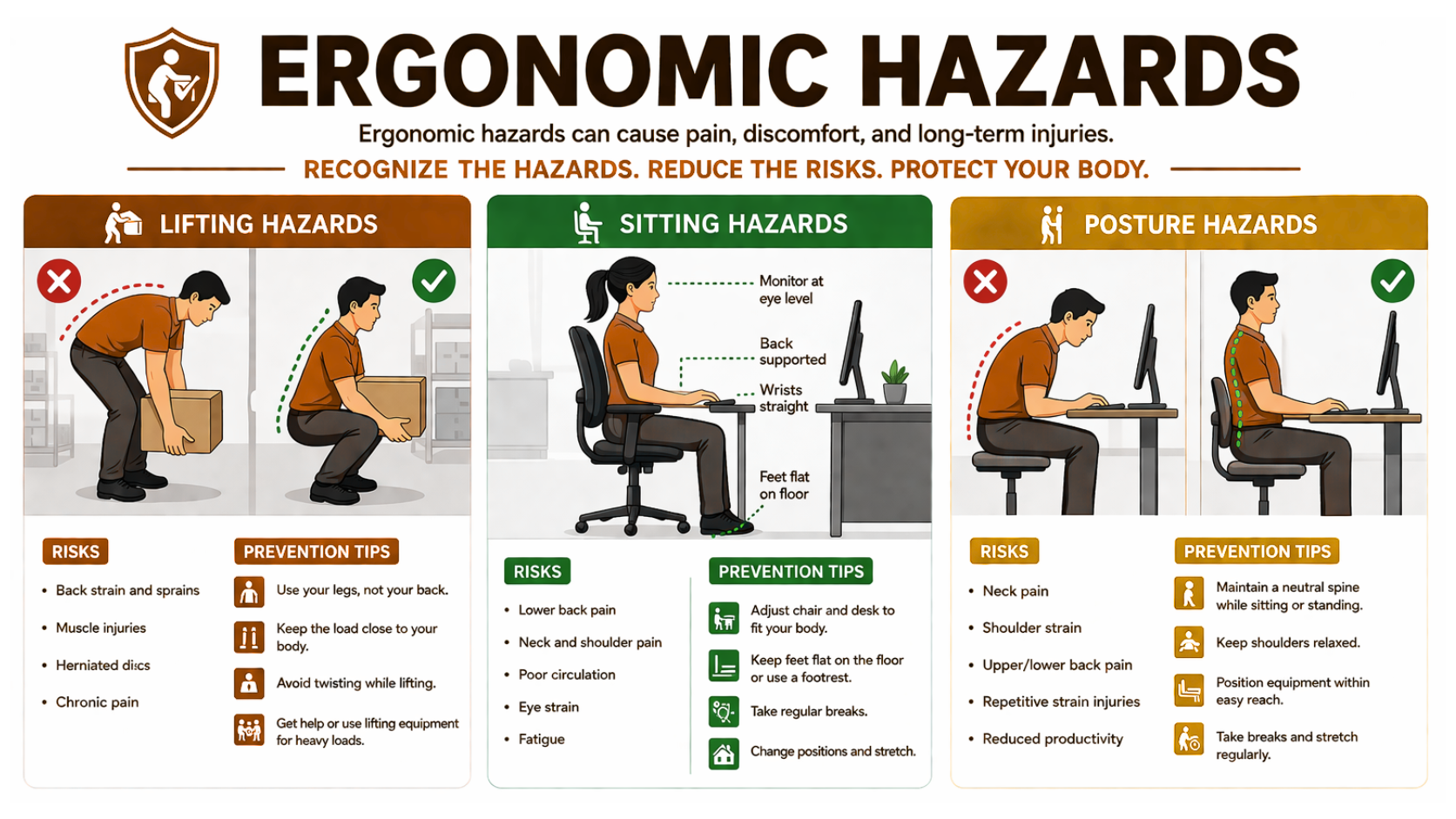
Ergonomic hazards occur due to repetitive movements, physical strain and poor workstation setup that affect muscles,nerves, ligaments and tendons. These workplace hazards often develop over time, increasing the risk of musculoskeletal disorders, back pain, and long-term occupational injuries. Creating an ergonomically safe environment helps reduce injury risks and enhances overall efficiency.
Common Ergonomic Hazards
a)Lifting hazards
Lifting hazards in the workplace can cause serious injuries, such as back pain, muscle strain and joint damage, due to heavy lifting, manual handling and repetitive lifting tasks. Poor posture and improper techniques increase the risk of workplace injuries and ergonomic hazards.
Common Risks
- Back strain and sprains
- Muscle injuries
- Herniated disc
- Chronic pain
Prevention Tips
- Use your legs, not your back
- Keep the load close to your body
- Avoid twisting while lifting
- Get help or use lifting equipment for heavy loads
b)Sitting Harads
Sitting Harads arise from prolonged sitting and lead to back pain, neck strain and poor posture in the workplace. Long hours at desks increase the risk of ergonomic hazards, muscle stiffness, and reduced productivity.
Common Risks
- Lower back pain
- Neck and shoulder pain
- Poor circulation
- Eye strain
- Fatigue
c)Prevention Tips
- Adjust chair and desk to fit your body
- Keep feet flat on the floor or use a footrest
- Take regular footrest
- Take regular breaks
- Change positions and stretch
d)Posture Hazard
Poor posture at work, such as slouching or bending for long hours, can lead to muscle strain and back pain. It increases the risk of long-term musculoskeletal disorders and reduces overall productivity.
Common Risks
- Neck pain
- Shoulder strain
- Upper/lower back pain
- Repetitive strain injuries
- Reduced productivity
Prevention Tips
- Maintain a neutral spine while sitting or standing
- Keep shoulders relaxed
- Position equipment within easy reach
- Take breaks and stretch regularly
- Change positions and stretch
Create a safer and more comfortable workspace -
6. Psychosocial Hazards
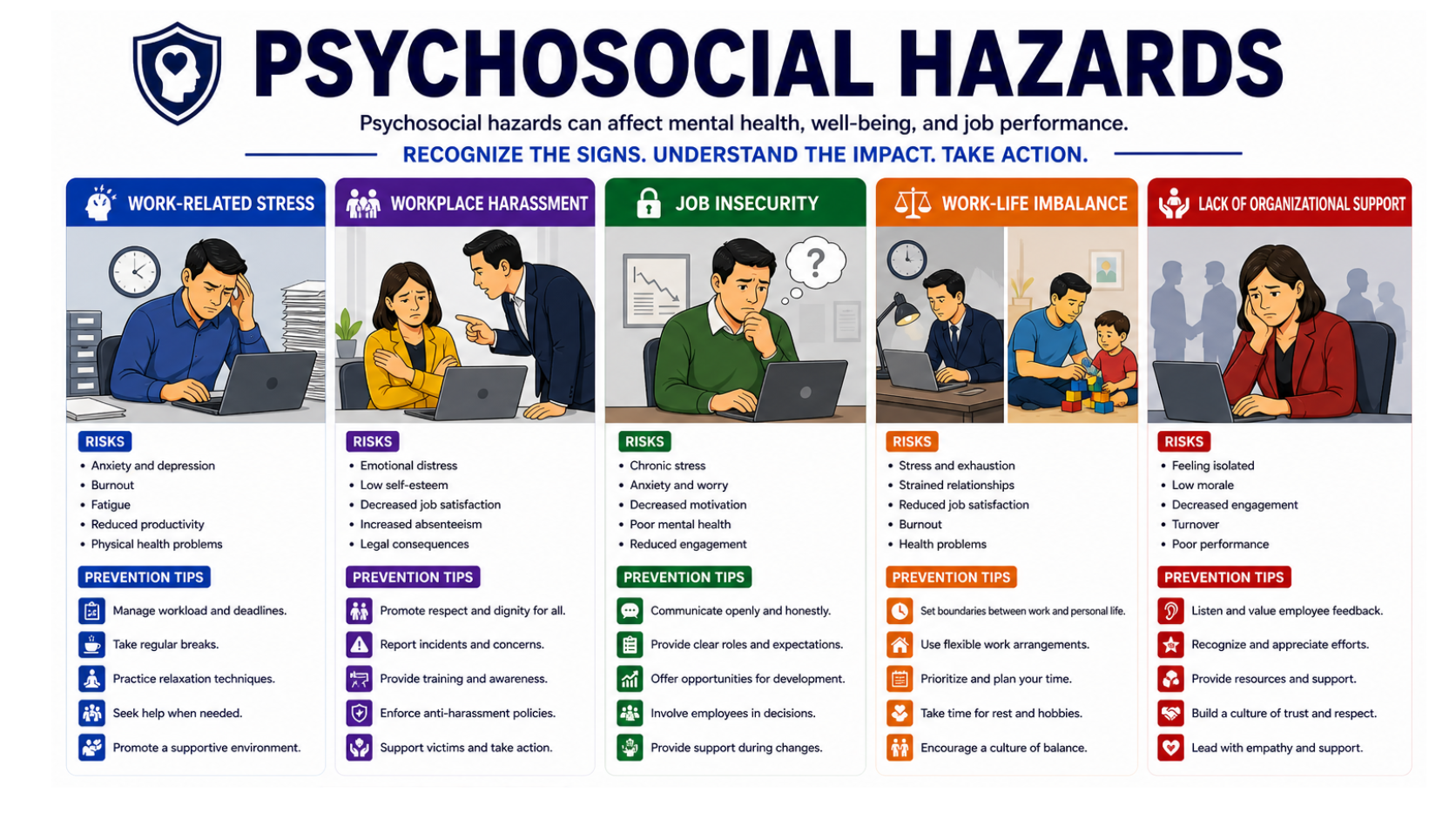
Psychosocial hazards refer to workplace conditions that can negatively impact employees’ mental and emotional health, well-being, and social interaction. These psychosocial hazards in the workplace often arise from work pressure, poor communication, lack of support and unsafe organizational culture.
If not managed properly, they can lead to serious mental health hazards in the workplace, such as stress, anxiety, burnout and reduced productivity.Common Psychosocial Hazards
a)Work-related stress
Excess workload, tight deadlines and continuous pressure can reduce focus and increase mental fatigue.
Common Risks
- Anxiety and depression
- Burnout
- Fatigue
- Reduced productivity
- Physical health problems
Prevention Tips
- Manage workload and deadlines
- Take regular breaks
- Practice relaxation techniques
- Follow noise control measures
- Seek help when needed
- Promote a supportive environment
b)Workplace harassment
Bullying, discrimination or verbal abuse can damage confidence and create a toxic work environment.
Common Risks
- Emotional distress
- Low self-esteem
- Decreased job satisfaction
- Increased absenteeism
- Legal consequences
Prevention Tips
- Promote respect and dignity for all
- Report incidents and concern
- Provide training and awareness
- Enforce anti-harassment policies
- Support victims and take action
c)Job insecurity
fear of losing a job can lead to anxiety, stress, and reduced performance.
Common Risks
- Chronic stress
- Anxiety and worry
- Decreased motivation
- Poor mental health
- Reduced engagement
Prevention Tips
- Communicate openly and honestly
- Provide clear roles and expectations
- Offer opportunities for development
- Involve employees in decisions
- Provide support during changes
d)Work-life imbalance
Long working hours disturb personal life and increase emotional stress.
Common Risks
- Stress and exhaustion
- Strained relationships
- Reduced job satisfaction
- Burnout
- Health problems
Prevention Tips
- Set boundaries between work and personal life
- Use flexible work arrangements
- Prioritize and plan your time
- Take time for rest and hobbies
- Encourage a culture of balance
e)Lack of organizational support
Poor communication and insufficient guidance from management can leave employees feeling isolated and unsupported.
Common Risks
- Feeling isolated
- Low morale
- Decreased engagement
- Turnover
- Poor performance
Prevention Tips
- Listen and value employee feedback
- Recognize and appreciate efforts
- Provide resources and support
- Build a culture of trust and respect
- Lead with empathy and support
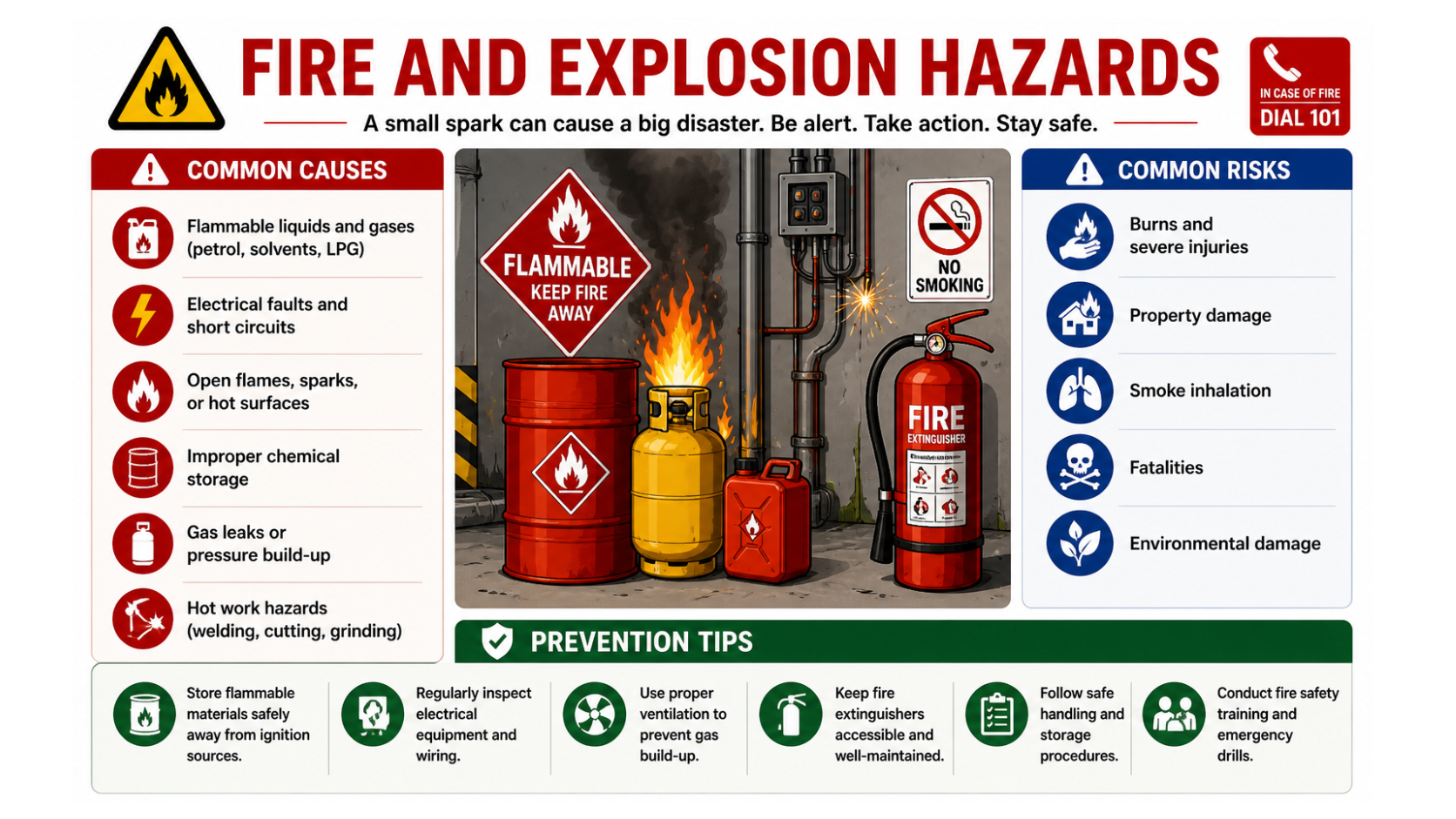
7. Fire and Explosion Hazards
Fire and Explosion Hazards are serious workplace risks caused by flammable material, gases, chemicals or faulty equipment. These hazards can lead to severe injuries, property damage and even loss of life if not properly controlled.
Common Psychosocial Hazards
a)Work-related stress
Excess workload, tight deadlines and continuous pressure can reduce focus and increase mental fatigue.
Common Risks
- Flammable liquids and gases(petrol, solvents, LPG)
- Electrical faults and short circuits
- Open flames, sparks, or hot surfaces
- Improper chemical storage
- Gas leaks or pressure build-up
- Hot work hazards (welding, cutting, grinding)
Common Risks
- Burns and severe injuries
- Property damage
- Smoke inhalation
- Fatalities
- Environmental damage
Prevention Tips
- Store flammable materials safely away from ignition sources
- Regularly inspect electrical equipment and wiring
- Use proper ventilation to prevent gas build-up
- Keep fire extinguishers accessible and well-maintained
- Follow safe handling and storage procedures
- Conduct fire safety training and emergency drills
Importance of Safety Training and Workplace Risk Assessments
- Increases Hazard Awareness: Helps employees recognize hazards early.
- Reduces Accidents: Lowers workplace incidents and injuries.
- Encourages Safe Practices: Promotes correct safety procedures.
- Supports Compliance: Meets safety regulations and standards.
- Improves Emergency Preparedness: Ensures quick response.
- Protects Health: Prevents exposure to harmful conditions.
- Strengthens Safety Culture: Encourages proactive safety.
- Reduces Costs: Minimizes downtime and expenses.
Why Choose Green World Group for HSE Training and Consultancy?
Green World Group is a trusted provider of HSE training and consultancy services dedicated to improving workplace safety standards. The organization offers industry-focused training programs, globally recognized certifications, and guidance from experienced safety professionals.
With a strong focus on practical knowledge and real-world application, Green World Group helps individuals build successful careers in Occupational Health and Safety. In addition, its consultancy services support organizations in strengthening safety management systems, ensuring compliance, and fostering a proactive safety culture.
Green World Group, a pioneer in safety certification, has delivered 2,200+ batches worldwide with 20 years of experience
-