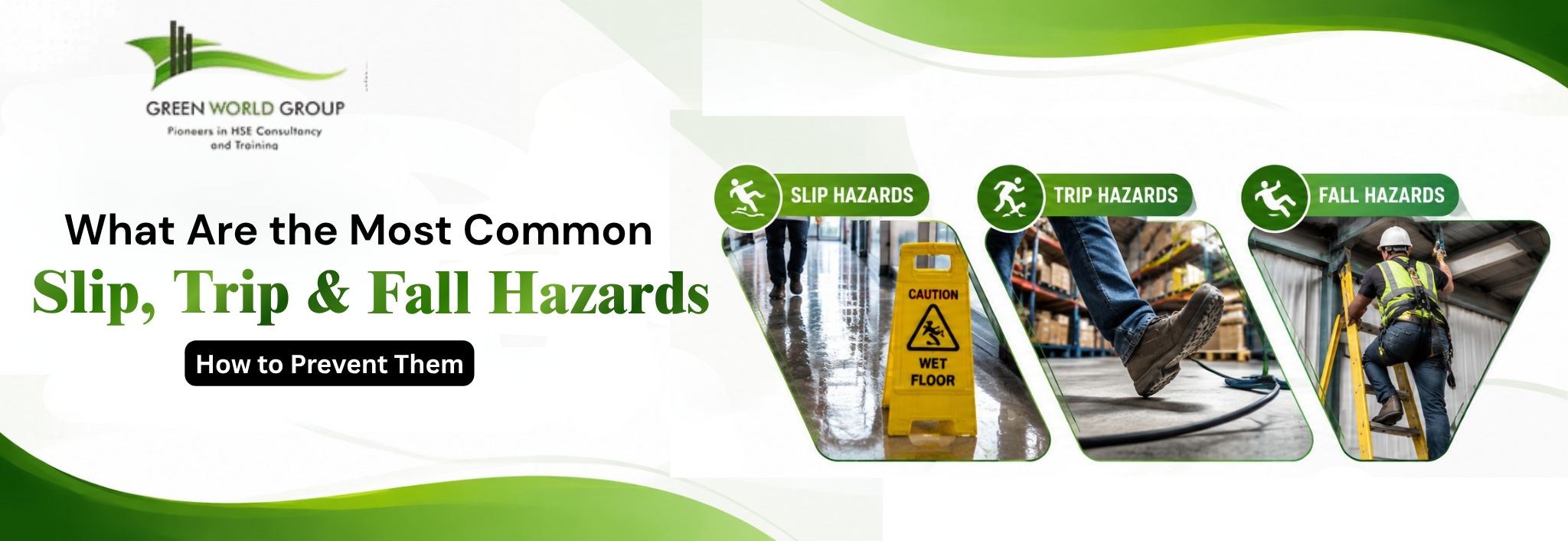
Slip, Trip, and Fall Hazards are among the common Workplace safety issues across industries such as construction, manufacturing, warehousing, healthcare, and offices. These Incidents may seem minor, but they can lead to serious injuries and lost productivity. medical expenses, and legal complications.
An organization that prioritizes workplace safety not only protects employees but also improves operational efficiency and strengthens its safety culture.
What Are Slip, Trip, and Fall Hazards?
Slip, trip, and fall hazards refer to unsafe workplace conditions that may cause employees to lose balance, stumble, or fall. These incidents often result from poor housekeeping, unsafe walking surfaces, inadequate lighting, improper footwear or lack of safety awareness.
Common injuries caused by occupational safety hazards related to slips, trips, and falls include the following:
- Sprains and strains
- Bone fractures
- Head injuries
- Back pain and spinal injuries
- Muscle damage
- Long-term disabilities
Effective workplace safety training helps employees recognize these hazards and follow safe working practices to minimize risks.
What is the difference between a slip, a trip, and a fall?
- Slips: Slips occur when there is insufficient friction between footwear and the walking surface. Wet floors, oil spills, grease, or polished surfaces are common causes of slipping accidents.
- Trips: Trips occur when a person’s foot strikes an object or uneven surface, causing loss of balance. Loose cables, cluttered walkways, damaged flooring, and uneven steps are common trip hazards.
- Falls: Falls may happen from the same level or from heights such as ladders, staircases, scaffolding, or platforms. Fall accidents can result in severe injuries, fractures, or even fatalities.
Want to Learn More About Slip, Trip, and Fall Hazards in the Workplace?
Check Here
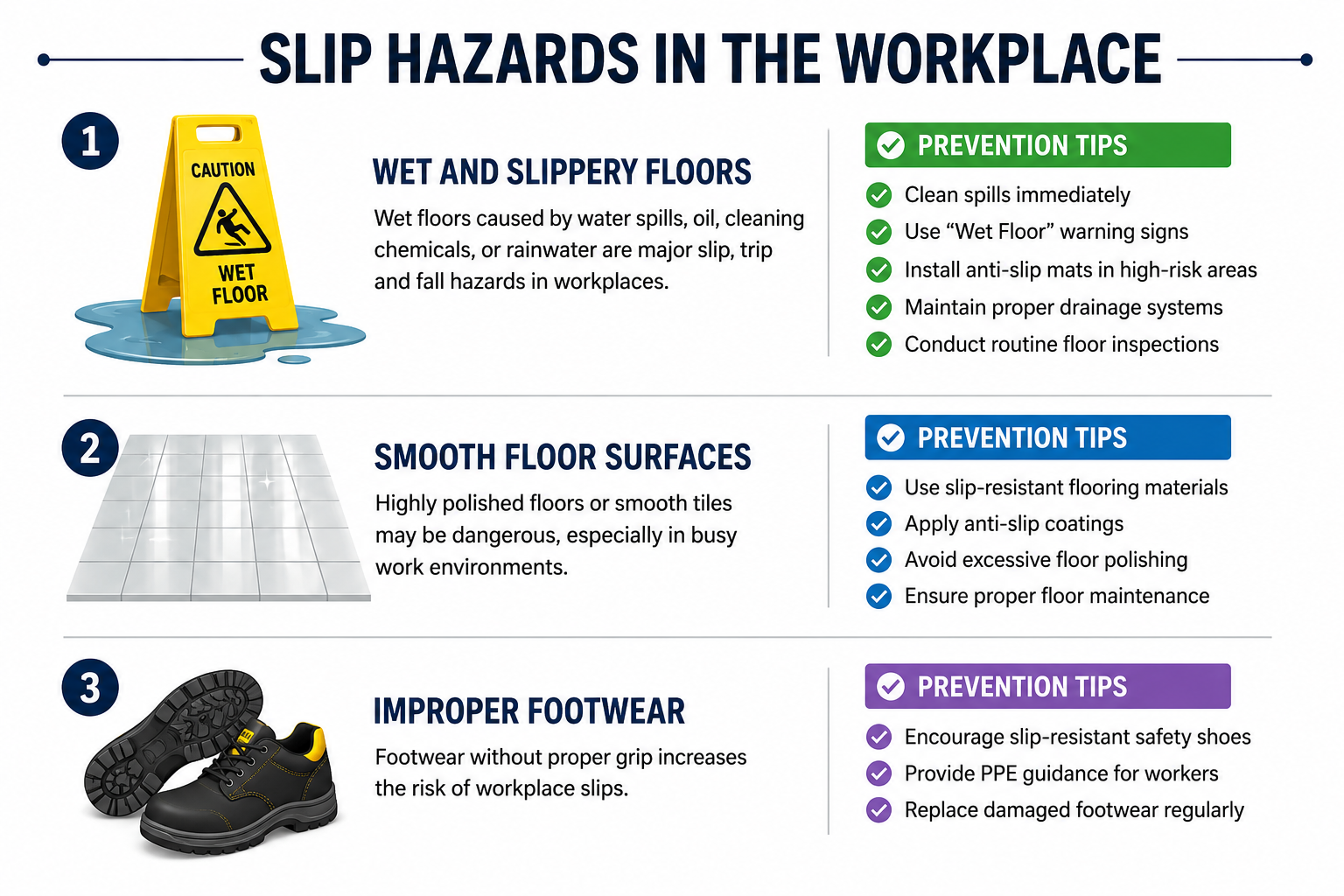
Slip Hazards in the Workplace
Slip Hazards are unsafe conditions that cause a person to lose traction between their feet and the walking surface, leading to Slipping accidents and possible injuries.
1. Wet and Slippery Floors
Wet floors caused by water spills, oil, cleaning chemicals, or rainwater are major slip, trip and fall hazards in workplaces.
Prevention Tips
- Clean spills immediately
- Use “Wet Floor” warning signs
- Install anti-slip mats in high-risk areas
- Maintain proper drainage systems
- Conduct routine floor inspections
Implementing workplace slip prevention programs helps reduce injuries and improve employee safety.
2. Smooth Floor Surfaces
Highly polished floors or smooth tiles may be dangerous, especially in busy work environments.
Prevention Tips
- Use slip-resistant flooring materials
- Apply anti-slip coatings
- Avoid excessive floor polishing
- Ensure proper floor maintenance
These slip and fall safety tips help reduce the chances of employees losing balance while walking.
3. Improper Footwear
Footwear without proper grip increases the risk of workplace slips.
Prevention Tips
- Encourage slip-resistant safety shoes
- Provide PPE guidance for workers
- Replace damaged footwear regularly
Proper footwear is an important part of workplace safety training programs.
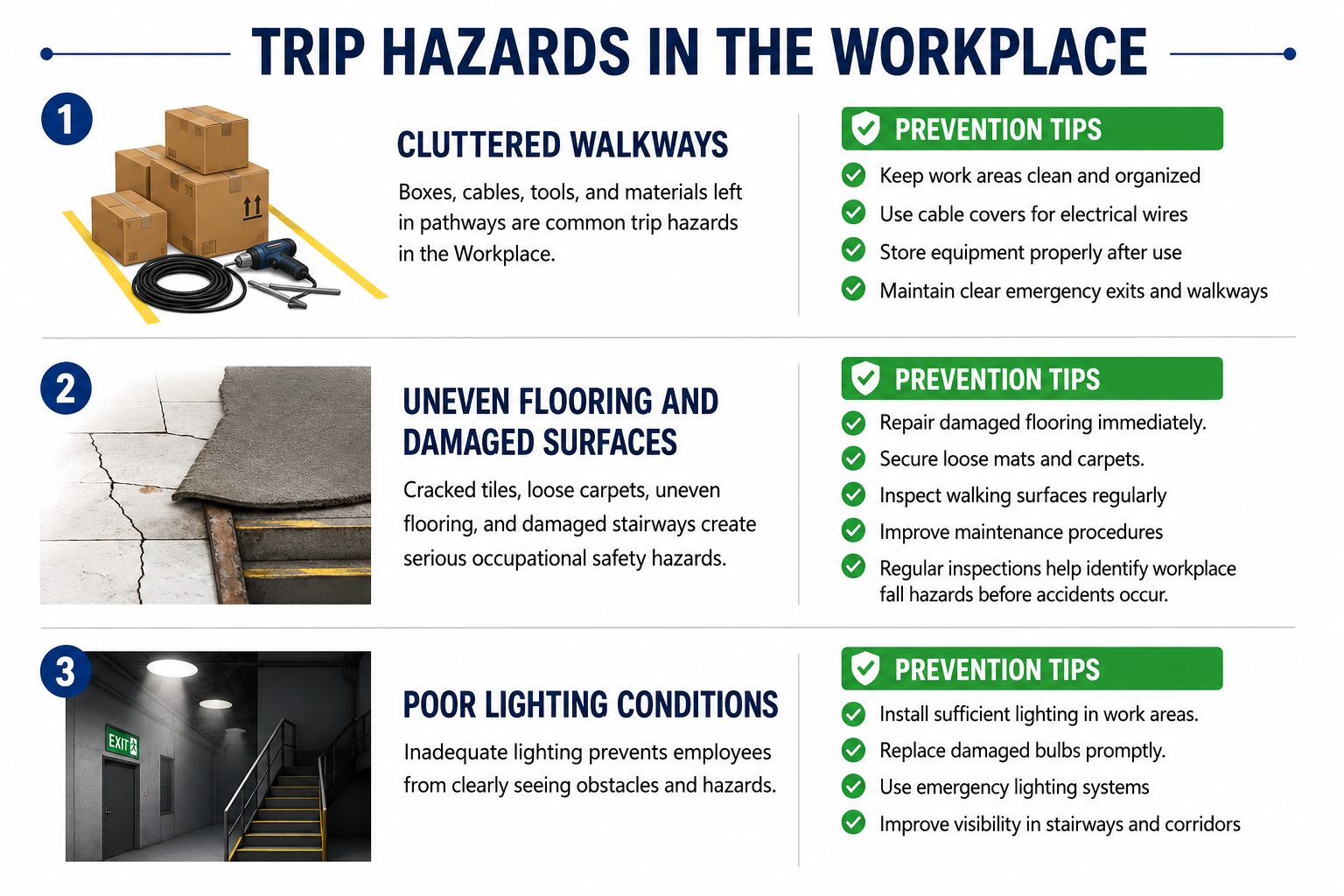
Trip Hazards in the Workplace
Trip hazards are dangerous situations that occur when a person’s foot contacts an object or an uneven surface, causing loss of balance and possible injuries in the workplace.
1. Cluttered Walkways
Boxes, cables, tools, and materials left in pathways are common trip hazards in the Workplace.
Prevention Tips
- Keep work areas clean and organized
- Use cable covers for electrical wires
- Store equipment properly after use
- Maintain clear emergency exits and walkways
Good housekeeping is one of the most effective ways to reduce trip hazards.
2. Uneven Flooring and Damaged Surfaces
Cracked tiles, loose carpets, uneven flooring, and damaged stairways create serious occupational safety hazards.
Prevention Tips
- Repair damaged flooring immediately
- Secure loose mats and carpets
- Inspect walking surfaces regularly
- Improve maintenance procedures
Regular inspections help identify workplace fall hazards before accidents occur.
3. Poor Lighting Conditions
Inadequate lighting prevents employees from clearly seeing obstacles and hazards.
Prevention Tips
- Install sufficient lighting in work areas
- Replace damaged bulbs promptly
- Use emergency lighting systems
- Improve visibility in stairways and corridors
Proper lighting plays an important role in workplace slip prevention and overall safety management.
Fall Hazards in the Workplace
Fall hazards are dangerous conditions that can cause a person to lose balance and fall from the same level or from a height, resulting in serious injury.
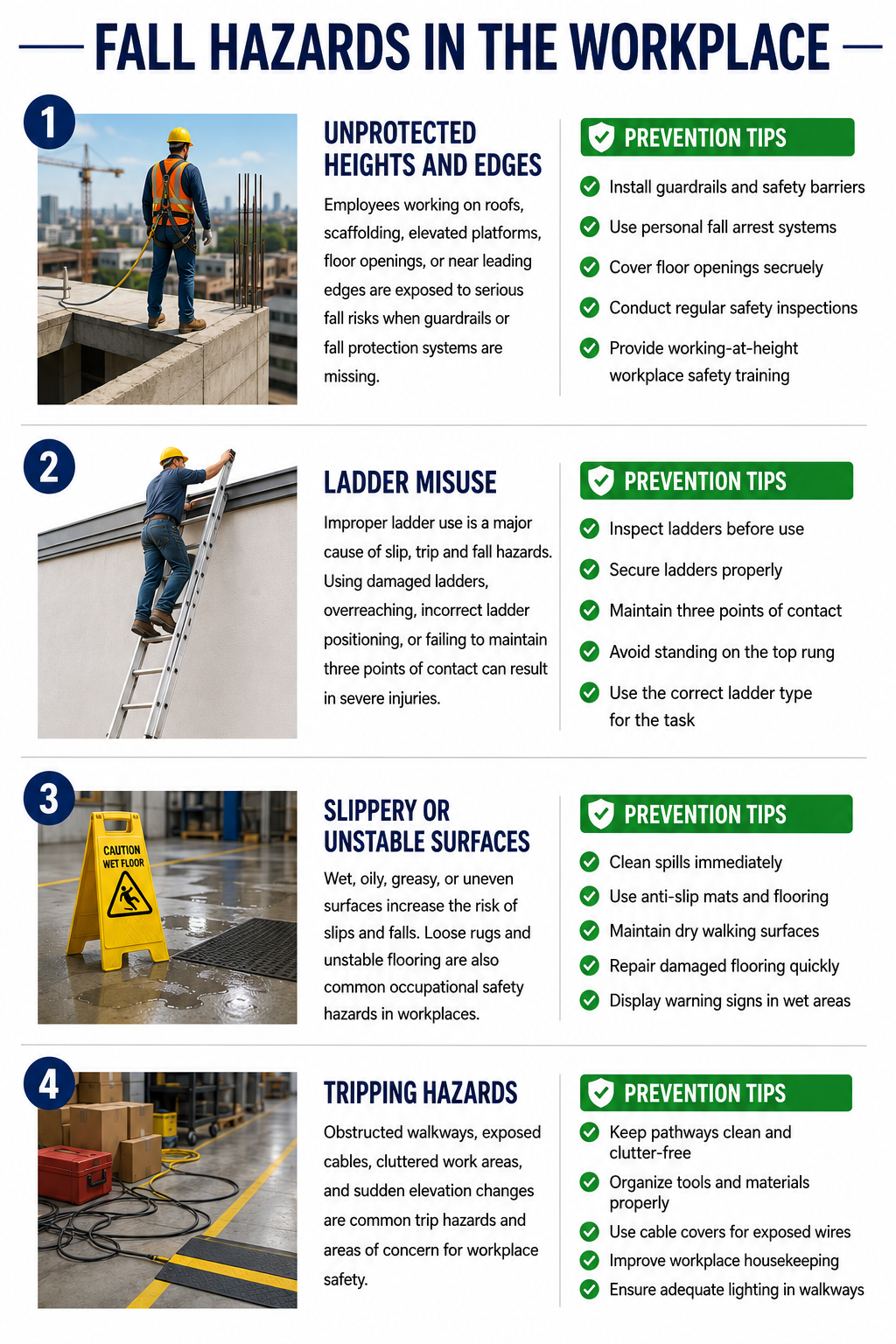
1. Unprotected Heights and Edges
Employees working on roofs, scaffolding, elevated platforms, floor openings, or near leading edges are exposed to serious fall risks when guardrails or fall protection systems are missing.
Prevention Tips
- Install guardrails and safety barriers
- Use personal fall arrest systems
- Cover floor openings securely
- Conduct regular safety inspections
Provide working-at-height workplace safety training.
2. Ladder Misuse
Improper ladder use is a major cause of slip, trip and fall hazards. Using damaged ladders, overreaching, incorrect ladder positioning, or failing to maintain three points of contact can result in severe injuries.
Prevention Tips
- Inspect ladders before use
- Secure ladders properly
- Maintain three points of contact
- Avoid standing on the top rung
- Use the correct ladder type for the task
Proper ladder safety is an essential part of workplace slip prevention programs.
3. Slippery or Unstable Surfaces
Wet, oily, greasy, or uneven surfaces increase the risk of slips and falls. Loose rugs and unstable flooring are also common occupational safety hazards in workplaces.
Prevention Tips
- Clean spills immediately
- Use anti-slip mats and flooring
- Maintain dry walking surfaces
- Repair damaged flooring quickly
- Display warning signs in wet areas
Effective workplace slip-prevention measures significantly reduce workplace injuries.
4. Tripping Hazards
Obstructed walkways, exposed cables, cluttered work areas, and sudden elevation changes are common trip hazards and areas of concern for workplace safety.
Prevention Tips
- Keep pathways clean and clutter-free
- Organize tools and materials properly
- Use cable covers for exposed wires
- Improve workplace housekeeping
- Ensure adequate lighting in walkways
Good housekeeping and hazard awareness are critical for reducing slip, trip and fall hazards.
Who is responsible for preventing slip, trip, and fall hazards in the workplace?
Preventing Slip, trip, and fall hazards is a shared responsibility in the workplace. Employers must create a safe working environment by identifying hazards, maintaining clean and safe floors, improving workplace lighting, and providing proper safety training.
Supervisors are responsible for monitoring daily conditions, ensuring safety rules are followed, and reporting hazards.
Employees must also play their part by keeping work areas clean, reporting spills or dangers immediately and following safety procedures.
When everyone works together and stays alert, most slip, trip, and fall accidents can be effectively prevented.
Train Your Workforce with Green World Group
Green World Group offers industry-focused health and safety training programs designed to improve workplace safety awareness, strengthen emergency preparedness, and support organizations in building a proactive safety culture through expert guidance and practical learning approaches.
Build a safer workplace with expert training from Green World Group today!
Green World Group, a pioneer in safety certification, has delivered 2,200+ batches worldwide with 20 years of experience